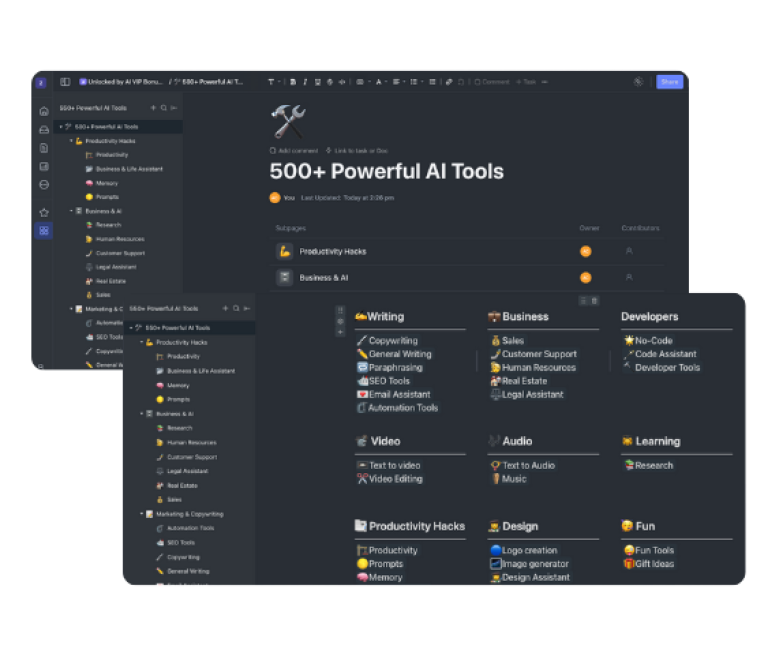
Select the tab below for the Prompt Topic you are looking for or use the Search to find a specific term.
					Write Product Descriptions:

Write a product description for [Product Name], a [Product Type]. It's designed for [Target Audience] and features [Key Features]. The description should be [Tone/Style], focusing on how the product benefits the user by [Key Benefits]. Please incorporate the following SEO keywords: [List of Keywords]. The description should be [Word Count] words long and formatted to fit our website’s product page layout.
					Blog Post Speaking Directly to Customer Persona:

Create a persuasive blog post to encourage the purchase of [Product/Service]. Begin with an engaging introduction highlighting a common problem or need. Detail how [Product/Service] provides an effective solution, focusing on unique features and benefits. Include customer testimonials for credibility. Address potential objections and provide clear, supportive responses. Conclude with a compelling call to action, encouraging readers to make a purchase, and provide easy access to the purchasing platform or contact information.
					Blog Post Establishing Trust and Credibility:

Create a blog post aimed at establishing trust and credibility. Begin with introducing authoritative sources and data to support your points. Include expert opinions and relevant case studies to underscore your expertise. Write in a clear, concise, and honest tone, avoiding jargon to ensure accessibility. Address common questions or misconceptions to demonstrate understanding of the audience's concerns. Conclude by reinforcing your commitment to providing reliable and valuable information, inviting feedback for continued improvement.
					Content Production Schedule:

Outline a daily schedule optimized for maximum content production for our brand. Start with a morning brief to review priorities and goals. Allocate focused blocks for content creation, including writing, designing, and editing, separated by short breaks to maintain productivity. Schedule time for content planning and research. Include a midday review to assess progress and adjust tasks. Dedicate late afternoon for collaborative work and feedback sessions. End the day with a wrap-up and preparation for the next day.
					Craft Content Strategy:

Create a start-to-finish roadmap for developing a comprehensive content strategy for our brand. Begin with audience analysis to understand preferences and pain points. Proceed to define content goals aligned with brand objectives. Identify key content types and channels suitable for our audience. Develop a content creation plan with timelines and responsibilities. Incorporate SEO best practices and performance metrics for evaluation. Conclude with a review and adaptation phase for continuous improvement of the strategy.
					Write Blog Articles:

Write a series of informative and engaging blog articles on [List of Topics] that are relevant to our brand and attractive to our target audience, which includes [Target Audience Description]. The articles should have a [Tone/Style] and aim to [Content Goals]. Integrate these SEO keywords [List of Keywords] to enhance search engine visibility. Each article should include engaging elements like images or videos and end with a CTA such as [Specific CTA]. The articles should be approximately [Word Count] words each, formatted with clear subheadings and bullet points for easy reading.
					Develop Email Marketing Campaigns:

Develop an email marketing campaign for our [Product Line] targeted at [Target Audience]. The campaign's goal is to [Campaign Goals]. The emails should reflect our brand's [Tone/Voice], highlighting [Key Features/Benefits] of our products. Include a compelling CTA that encourages [Desired Action], and incorporate any special offers [Detail Offers/Incentives]. Ensure the email has a captivating subject line, a concise introduction, engaging body content, and adheres to [Legal/Compliance Requirements].
					Blog Post Showcasing Value and Benefits:

Create a blog post showcasing the value and benefits of a product. Start with an engaging introduction that highlights a common problem or need your target audience faces. Detail the product's features and explain how each specifically addresses those needs. Include customer testimonials or case studies to provide real-world proof of the product's effectiveness. Use high-quality images or videos of the product in use. Conclude with a clear call to action, directing readers to where they can purchase or learn more about the product.
					Content Ideas Capture:

Share techniques for capturing actionable content ideas from meetings about [Brand or Topic]. Recommend actively listening for key themes and questions raised. Suggest noting down direct quotes and unique insights for authenticity in content. Advise on categorizing ideas into themes for future reference. Include tips on using mind maps or idea boards for visual organization. Emphasize the importance of immediate review post-meeting to identify and prioritize the most viable content ideas.
					Blog Post Showcasing Features and Benefits:

Create a blog post showcasing the features and benefits of a product. Begin with an engaging introduction that highlights a common problem or need. Detail each feature of the product, directly linking it to a specific benefit for the user. Use real-life scenarios or case studies to demonstrate the product's impact. Include high-quality images or videos of the product in use. Conclude with a summary of key benefits and a clear, compelling call to action.
					Brainstorming Sessions:

Provide tactics to stay energized and engaged during long content brainstorming sessions. Include short, regular breaks for physical activity and mental rest. Suggest incorporating interactive and diverse brainstorming methods like mind mapping or role-playing to maintain interest. Recommend healthy snacks and hydration to maintain energy levels. Encourage changing the environment or session format periodically to keep the atmosphere dynamic. Include tips for effective facilitation to ensure productive and focused discussions.
					Landing Page Copy:

Create compelling copy for our landing page that is focused on driving conversions and enhancing user experience. Start with a powerful headline that captures the essence of our offering and resonates with our target audience. Follow with a subheadline that expands on the headline, offering a clear value proposition. Develop a concise and persuasive introductory paragraph that outlines what we offer and why it's beneficial. Include bullet points highlighting key features and benefits, using persuasive language that speaks directly to the user’s needs and pain points. Incorporate testimonials or customer reviews for social proof. Ensure the copy maintains a consistent and engaging brand voice throughout. Conclude with a clear and compelling call to action, such as ‘Sign Up’, ‘Learn More’, or ‘Get Started’, strategically placed to prompt immediate user response.
					Video Script:

Write a script for an engaging and informative video on [Specified Topic]. The script should start with a captivating introduction that hooks the audience immediately. Ensure it aligns with our brand's voice, whether it's professional, playful, or inspirational. The main body of the script should provide clear and concise information about the topic, incorporating engaging storytelling or case studies if applicable. Include key points, facts, or statistics that add depth to the subject matter. Plan for transitions between segments to maintain viewer engagement. Integrate interactive elements like questions or prompts for viewers to comment. Conclude with a strong closing statement that reinforces the key message and includes a call to action relevant to our brand, such as visiting our website or subscribing to our channel.
					Ebook Creation:

Compose an informative eBook on [Topic] that serves as an effective lead magnet on our website. Outline the key concepts and information that the eBook will cover, ensuring it provides substantial value and insights related to the topic. Structure the content into clear, digestible chapters, each focusing on a specific aspect of [Topic]. Write in an engaging and accessible style, suitable for our target audience, and include real-life examples, case studies, or anecdotes. Incorporate visually appealing elements like charts, graphs, and images. Conclude each chapter with key takeaways or actionable tips, and design an attractive cover page and layout that aligns with our brand's visual identity.
					Newsletter Creation:

Design and draft a monthly newsletter for [Company Name] to engage with our email subscribers and keep them updated about the latest developments. Begin with a captivating header and a personalized greeting that resonates with the subscribers. For the main content, include a mix of the following elements: Company News, Upcoming Events, Feature Article, Customer Spotlight, Special Offers or Promotions, Useful Resources, Engagement Opportunities, and Visual Elements. Conclude with a closing message that thanks subscribers for their continued support and includes a clear call-to-action.
					Headline:

Craft a catchy and attention-grabbing headline for [Content Type] that instantly draws in readers. The headline should be concise, memorable, and convey the core message or value of the content in a compelling way. Use powerful and emotive words that resonate with the target audience and create a sense of curiosity or urgency. Consider using rhetorical questions, intriguing statements, or surprising facts to pique interest. Ensure the headline is relevant to the content and aligns with the overall tone and style of the piece. Make it SEO-friendly by including relevant keywords without sacrificing creativity or readability.
					Create Podcasts:

Plan and create an engaging podcast series centered around [Podcast Theme] that aligns with our brand’s values and interests. The target audience is [Target Audience Description]. The series will consist of [Number] episodes, each lasting approximately [Length] minutes, following a [Format]. Each episode will cover topics such as [List of Topics], featuring [Types of Guests/Segments]. The podcast should have a [Tone/Style] and include strategies to engage our listeners like [Engagement Strategies]. Promote the series through [Promotional Tactics]. Ensure all episodes meet our technical standards for [Technical Requirements].
					Short Summary:

Write a concise yet informative summary covering the key points of [Subject]. Begin with a brief introduction that provides context and outlines the significance of the topic. Follow with a clear and structured presentation of the main points, ensuring each point is succinctly explained with essential details. Use bullet points or numbered lists for clarity if appropriate. Include any critical data, statistics, or quotes from authoritative sources to add credibility. Conclude with a summary statement that encapsulates the overall essence of the topic and its implications or relevance. Ensure the summary is straightforward, avoiding jargon or overly technical language to maintain accessibility for a broad audience.
					Customer Case Study:

Develop a comprehensive case study illustrating how a company successfully utilized [Product] to achieve significant outcomes. Include a brief introduction about the company, feature quotes from key clients or representatives, and present key success metrics. Incorporate graphical elements like charts or infographics. Conclude with a summary of the product's role in the company’s achievements.
					FAQ Generator:

Generate a comprehensive list of FAQs for [Product/Service/Topic] that addresses common customer queries and concerns. Begin by identifying the most frequently asked questions by customers, drawing from customer service interactions, social media inquiries, and feedback forms. Ensure the questions cover a broad range of topics, including product features, usage instructions, troubleshooting, pricing, availability, and support services. Write clear and concise answers for each question, providing helpful and accurate information. Include any relevant tips, best practices, or additional resources that could assist the customer. Organize the FAQs in a logical order, grouping similar topics together for easy navigation. Conclude with a section for any additional support options available, such as customer service contact information or links to more detailed resources.
					Webinar Content Planning:

Plan and organize a comprehensive webinar on [Topic] for our subscribers. Cover key aspects of [Topic], providing valuable insights. Include an introduction, main content sections, a Q&A session, and a conclusion. Invite expert speakers, include interactive elements, and ensure convenient scheduling. Develop promotional materials and conclude with a call to action encouraging attendees to explore more of our services or products.
					Infographic Creation:

Create an informative and visually appealing infographic on [Topic] for our blog post. The infographic should present key points, statistics, or trends related to [Topic] that resonate with our target audience. Use a color scheme and design elements that align with our brand’s style. Ensure the text is clear and the visuals are engaging, and optimize the infographic for web viewing and social media sharing.
					Social Media Content Calendar:

Develop a monthly content calendar for our social media channels, aligning with our brand voice and strategy. Plan and schedule diverse types of engaging content, including informative posts, interactive polls, behind-the-scenes glimpses, and promotional announcements. Allocate specific days for themed posts and include key industry dates for special content. Ensure a balance between promotional, educational, and entertaining content, and incorporate analytics for strategy refinement.
					Content Audit:

Conduct a content audit on our website [Website URL] to evaluate the performance of our existing content and identify areas for improvement. Review all content for relevance, engagement, and SEO effectiveness. Analyze key metrics, identify high and low-performing content, and provide recommendations for content optimization. Summarize findings in a report with actionable insights.
					Instagram Caption:

Craft an engaging Instagram caption for a post themed around [Post Theme] that resonates with our brand voice. The caption should start with a catchy line, use a tone matching our brand, and encourage audience interaction. Include relevant hashtags and a call to action, ensuring the caption reflects our brand’s personality and values, and encourages community engagement.
					Craft Brochure:

Craft a brochure for [Product], highlighting its unique qualities and advantages. The target audience is [Target Audience Description]. Include key features like [List of Features] and their benefits, emphasizing how they solve [Specific Problems or Needs]. Feature client testimonials that attest to the product's effectiveness. The brochure should have a visually appealing design with product images and follow our [Brand's Color Scheme/Design Theme]. The content should be structured to first introduce the product, followed by features, client feedback, and end with a compelling CTA like [Specific CTA]. Choose a [Brochure Format] that best showcases this information.
					Content Ideas Capture:

Share techniques for capturing actionable content ideas from meetings about [Brand or Topic]. Recommend actively listening for key themes and questions raised. Suggest noting down direct quotes and unique insights for authenticity in content. Advise on categorizing ideas into themes for future reference. Include tips on using mind maps or idea boards for visual organization. Emphasize the importance of immediate review post-meeting to identify and prioritize the most viable content ideas.
					Blog Post Showcasing Features and Benefits:

Create a blog post showcasing the features and benefits of a product. Begin with an engaging introduction that highlights a common problem or need. Detail each feature of the product, directly linking it to a specific benefit for the user. Use real-life scenarios or case studies to demonstrate the product's impact. Include high-quality images or videos of the product in use. Conclude with a summary of key benefits and a clear, compelling call to action.
					Prepare Project Kickoff:

Develop a detailed checklist for the project kickoff of [Project] covering all necessary preparations.
					Manage Project Team:

Provide a step-by-step guide on managing the project team for [Project], including setting goals and communication practices.
					Create Comprehensive Project Charter:

Draft a detailed project charter for [Project Name], encompassing the project overview, goals, team structure, schedule, resources, risks, and stakeholder commitments.
					Establish Project Milestones and Timeline:

Set up the key milestones and a timeline for [Project Name] to track progress and manage timelines effectively.
					Develop Project Team Roles and Responsibilities:

Outline the roles and duties for the project team on [Project Name], ensuring role clarity and project alignment.
					Design Project Communication Plan:

Formulate a communication strategy for [Project Name] detailing stakeholder engagement and information dissemination.
					Prepare Project Kick-Off Meeting Agenda:

Craft an agenda for the kick-off meeting of [Project Name] that covers all key discussion points.
					Construct Project Risk Management Plan:

Create a risk management strategy for [Project Name], including risk assessment and mitigation measures.
					Create Project Status Report:

Assemble a status report for [Project Name] that encapsulates achievements, upcoming tasks, and current issues.
					Develop Project Resource Plan:

Outline the resource requirements and allocation plan for [Project Name], addressing all resource aspects.
					Track Project:

Provide an actionable checklist for monitoring [Project] progress against set goals and milestones.
					Run Virtual Project Meetings:

Share guidelines on conducting effective virtual meetings for project [Project], ensuring remote collaboration success.
					Develop Project Budget and Financial Plan:

Build a comprehensive financial framework for [Project], detailing expenditures and funding strategies.
					Write Project Quality Management Plan:

Draft a plan to ensure quality standards for [Project Name] are defined, managed, and achieved throughout its cycle.
					Evaluate Project Performance:

Apply evaluation techniques to review the progress and performance of [Project Name], offering actionable insights.
					Update Project Management Plan:

Revise and enhance the project management plan for [Project Name] with the incorporation of new data and stakeholder feedback.
					Write Project Closure Report:

Compose an all-encompassing closure report for [Project Name], capturing achievements and takeaways for future projects.
					Create Project Stakeholder Management Plan:

Formulate a stakeholder engagement plan for [Project Name] that ensures involved parties are effectively managed and informed.
					Set Up Project Change Management Plan:

Initiate a change management protocol for [Project Name] to navigate and control scope changes smoothly.
					Develop Project Issue Management Plan:

Establish a systematic approach for identifying and resolving issues throughout the lifecycle of [Project Name].
					Assess Project Feasibility:

Outline a feasibility study for [Project Name], detailing the economic, technical, legal, and scheduling considerations to make an informed project decision.
					Define Project Success Criteria:

Document the key success criteria for [Project Name] that will be used to measure the project’s effectiveness upon completion.
					Implement Project Control Processes:

Establish control mechanisms for [Project Name] to monitor project activities and manage changes to performance baselines.
					Plan Project Quality Assurance Activities:

Develop a schedule for quality assurance activities for [Project Name] to maintain high standards throughout the project lifecycle.
					Conduct Project Stakeholder Analysis:

Perform a comprehensive stakeholder analysis for [Project Name], identifying needs, expectations, and potential influences on project outcomes.
					Organize Project Documentation:

Set up a documentation plan for [Project Name] that specifies how to record, store, and access project documents effectively.
					Optimize Project Resource Allocation:

Create a resource allocation strategy for [Project Name] that maximizes efficiency and reduces waste.
					Plan for Project Training and Development:

Develop a training plan to enhance team capabilities and performance for [Project Name].
					Coordinate Project Procurement Management:

Craft a procurement plan for [Project Name] outlining the processes for vendor selection, contract management, and purchase agreements.
					Establish Project Environmental Compliance:

Outline environmental compliance measures and sustainable practices to be adopted in [Project Name].
					Create About Us Page:

Compose an About Us page that showcases the unique culture and core values of [company name].
					Develop Website Copy:

Craft website copy that engages visitors and reflects the unique selling points of [website name].
					Write Company Vision Statement:

Articulate a future-focused vision statement for [company name], highlighting aspirations and long-term impact.
					Write Product Reviews:

Write convincing product reviews for our new product <div class="woocommerce ">
<div class="columns-3 products col_wrap_three rh-flex-eq-height woogridrev">

            <div class="product col_item column_grid type-product rh-cartbox hide_sale_price two_column_mobile woo_column_grid rh-shadow4 flowvisible">
        <div class="position-relative woofigure pb15 pt15 pl15 pr15">
                <div class="button_action rh-shadow-sceu pt5 pb5 rhhidden showonsmobile">
            <div>
                                                <div class="heart_thumb_wrap text-center"><span class="flowhidden cell_wishlist"><span class="heartplus" data-post_id="1064" data-informer="0"><span class="ml5 rtlmr5 wishaddedwrap" id="wishadded1064">Added to wishlist</span><span class="ml5 rtlmr5 wishremovedwrap" id="wishremoved1064">Removed from wishlist</span> </span></span><span data-wishcount="0" id="wishcount1064" class="thumbscount">0</span> </div>
            </div>
                            <div>
                    <div class="quick_view_wrap pt5 pl5 pr5 pb5"><span class="flowhidden cell_quick_view"><span class="cursorpointer quick_view_button" data-product_id="1064"><i class="rhicon rhi-search-plus"></i></span></div>                </div>
                                        <span class="compare_for_grid">

                    <span class="wpsm-button wpsm-button-new-compare addcompare-id-1064 white small not-incompare comparecompact" data-addcompare-id="1064"><i class="rhicon re-icon-compare"></i><span class="comparelabel">Add to compare</span></span>
                </span>

        </div>
        <figure class="text-center mb0 eq_figure">
            <a class="img-centered-flex rh-flex-justify-center rh-flex-center-align" href="https://zindo.co/5-out/">
                                    <img decoding="async" src="https://zindo.co/wp-content/themes/rehub-theme/images/default/blank.gif" data-src="https://zindo.co/wp-content/uploads/2023/07/5-out-300x150.png" alt="5-out" data-skip-lazy="" class="lazyload " width="300" height="150" title="AI Prompts 2">

            </a>

        </figure>
        </div>
                <div class="pb10 pr15 pl15">
            <div class="colored_rate_bar floatright ml15 mb15 rtlmr15">
                            </div>
            <h3 class="text-clamp text-clamp-3 mb15 mt0 font105 mobfont100 fontnormal lineheight20">
                                <a href="https://zindo.co/5-out/">5-Out</a>
            </h3>

            <div class="clearbox"></div>


<div class="wp-block-group is-layout-flow wp-block-group-is-layout-flow"></div>

                    </div>
        <div class="border-top pt10 pr10 pl10 pb10 rh-flex-center-align abposbot">
            <div class="button_action position-static hideonsmobile rh-flex-center-align">
                <div class="floatleft mr5 rtlfloatleft">
                                                            <div class="heart_thumb_wrap text-center"><span class="flowhidden cell_wishlist"><span class="heartplus" data-post_id="1064" data-informer="0"><span class="ml5 rtlmr5 wishaddedwrap" id="wishadded1064">Added to wishlist</span><span class="ml5 rtlmr5 wishremovedwrap" id="wishremoved1064">Removed from wishlist</span> </span></span><span data-wishcount="0" id="wishcount1064" class="thumbscount">0</span> </div>
                </div>
                                    <div class="floatleft rtlfloatleft">
                        <div class="quick_view_wrap pl10 pr10"><span class="flowhidden cell_quick_view"><span class="cursorpointer quick_view_button" data-product_id="1064"><i class="rhicon rhi-search-plus"></i></span></div>                    </div>
                                                    <span class="compare_for_grid floatleft rtlfloatleft">

                        <span class="wpsm-button wpsm-button-new-compare addcompare-id-1064 white small not-incompare comparecompact" data-addcompare-id="1064"><i class="rhicon re-icon-compare"></i><span class="comparelabel">Add to compare</span></span>
                    </span>

            </div>
            <div class="rh-flex-right-align mobilesblockdisplay rehub-btn-font pr5 pricefont100 redbrightcolor fontbold mb0 lineheight20 text-right-align">


            </div>
        </div>
    </div>
</div></div> to boost sales.
					Create Case Studies:

Create detailed case studies showcasing the success stories of our customers using our product <div class="woocommerce ">
<div class="columns-3 products col_wrap_three rh-flex-eq-height woogridrev">

            <div class="product col_item column_grid type-product rh-cartbox hide_sale_price two_column_mobile woo_column_grid rh-shadow4 flowvisible">
        <div class="position-relative woofigure pb15 pt15 pl15 pr15">
                <div class="button_action rh-shadow-sceu pt5 pb5 rhhidden showonsmobile">
            <div>
                                                <div class="heart_thumb_wrap text-center"><span class="flowhidden cell_wishlist"><span class="heartplus" data-post_id="1064" data-informer="0"><span class="ml5 rtlmr5 wishaddedwrap" id="wishadded1064">Added to wishlist</span><span class="ml5 rtlmr5 wishremovedwrap" id="wishremoved1064">Removed from wishlist</span> </span></span><span data-wishcount="0" id="wishcount1064" class="thumbscount">0</span> </div>
            </div>
                            <div>
                    <div class="quick_view_wrap pt5 pl5 pr5 pb5"><span class="flowhidden cell_quick_view"><span class="cursorpointer quick_view_button" data-product_id="1064"><i class="rhicon rhi-search-plus"></i></span></div>                </div>
                                        <span class="compare_for_grid">

                    <span class="wpsm-button wpsm-button-new-compare addcompare-id-1064 white small not-incompare comparecompact" data-addcompare-id="1064"><i class="rhicon re-icon-compare"></i><span class="comparelabel">Add to compare</span></span>
                </span>

        </div>
        <figure class="text-center mb0 eq_figure">
            <a class="img-centered-flex rh-flex-justify-center rh-flex-center-align" href="https://zindo.co/5-out/">
                                    <img decoding="async" src="https://zindo.co/wp-content/themes/rehub-theme/images/default/blank.gif" data-src="https://zindo.co/wp-content/uploads/2023/07/5-out-300x150.png" alt="5-out" data-skip-lazy="" class="lazyload " width="300" height="150" title="AI Prompts 2">

            </a>

        </figure>
        </div>
                <div class="pb10 pr15 pl15">
            <div class="colored_rate_bar floatright ml15 mb15 rtlmr15">
                            </div>
            <h3 class="text-clamp text-clamp-3 mb15 mt0 font105 mobfont100 fontnormal lineheight20">
                                <a href="https://zindo.co/5-out/">5-Out</a>
            </h3>

            <div class="clearbox"></div>


<div class="wp-block-group is-layout-flow wp-block-group-is-layout-flow"></div>

                    </div>
        <div class="border-top pt10 pr10 pl10 pb10 rh-flex-center-align abposbot">
            <div class="button_action position-static hideonsmobile rh-flex-center-align">
                <div class="floatleft mr5 rtlfloatleft">
                                                            <div class="heart_thumb_wrap text-center"><span class="flowhidden cell_wishlist"><span class="heartplus" data-post_id="1064" data-informer="0"><span class="ml5 rtlmr5 wishaddedwrap" id="wishadded1064">Added to wishlist</span><span class="ml5 rtlmr5 wishremovedwrap" id="wishremoved1064">Removed from wishlist</span> </span></span><span data-wishcount="0" id="wishcount1064" class="thumbscount">0</span> </div>
                </div>
                                    <div class="floatleft rtlfloatleft">
                        <div class="quick_view_wrap pl10 pr10"><span class="flowhidden cell_quick_view"><span class="cursorpointer quick_view_button" data-product_id="1064"><i class="rhicon rhi-search-plus"></i></span></div>                    </div>
                                                    <span class="compare_for_grid floatleft rtlfloatleft">

                        <span class="wpsm-button wpsm-button-new-compare addcompare-id-1064 white small not-incompare comparecompact" data-addcompare-id="1064"><i class="rhicon re-icon-compare"></i><span class="comparelabel">Add to compare</span></span>
                    </span>

            </div>
            <div class="rh-flex-right-align mobilesblockdisplay rehub-btn-font pr5 pricefont100 redbrightcolor fontbold mb0 lineheight20 text-right-align">


            </div>
        </div>
    </div>
</div></div>.
					Craft Email Body Copy:

Write persuasive email body copy for [specific campaign] to encourage [desired action].
					Write Press Release:

Write a concise and compelling press release to announce [specific news or event] related to our company [company name].
					Develop Social Media Posts:

Develop engaging social media posts for our platform [platform name] to increase followers and engagement.
					Create Blog Posts:

Create informative and interesting blog posts for our website [website name] on the topic of [topic].Create informative and interesting blog posts for our website [website name] on the topic of [topic].
					Write Product Descriptions:

Write compelling product descriptions for our new product <div class="woocommerce ">
<div class="columns-3 products col_wrap_three rh-flex-eq-height woogridrev">

            <div class="product col_item column_grid type-product rh-cartbox hide_sale_price two_column_mobile woo_column_grid rh-shadow4 flowvisible">
        <div class="position-relative woofigure pb15 pt15 pl15 pr15">
                <div class="button_action rh-shadow-sceu pt5 pb5 rhhidden showonsmobile">
            <div>
                                                <div class="heart_thumb_wrap text-center"><span class="flowhidden cell_wishlist"><span class="heartplus" data-post_id="1064" data-informer="0"><span class="ml5 rtlmr5 wishaddedwrap" id="wishadded1064">Added to wishlist</span><span class="ml5 rtlmr5 wishremovedwrap" id="wishremoved1064">Removed from wishlist</span> </span></span><span data-wishcount="0" id="wishcount1064" class="thumbscount">0</span> </div>
            </div>
                            <div>
                    <div class="quick_view_wrap pt5 pl5 pr5 pb5"><span class="flowhidden cell_quick_view"><span class="cursorpointer quick_view_button" data-product_id="1064"><i class="rhicon rhi-search-plus"></i></span></div>                </div>
                                        <span class="compare_for_grid">

                    <span class="wpsm-button wpsm-button-new-compare addcompare-id-1064 white small not-incompare comparecompact" data-addcompare-id="1064"><i class="rhicon re-icon-compare"></i><span class="comparelabel">Add to compare</span></span>
                </span>

        </div>
        <figure class="text-center mb0 eq_figure">
            <a class="img-centered-flex rh-flex-justify-center rh-flex-center-align" href="https://zindo.co/5-out/">
                                    <img decoding="async" src="https://zindo.co/wp-content/themes/rehub-theme/images/default/blank.gif" data-src="https://zindo.co/wp-content/uploads/2023/07/5-out-300x150.png" alt="5-out" data-skip-lazy="" class="lazyload " width="300" height="150" title="AI Prompts 2">

            </a>

        </figure>
        </div>
                <div class="pb10 pr15 pl15">
            <div class="colored_rate_bar floatright ml15 mb15 rtlmr15">
                            </div>
            <h3 class="text-clamp text-clamp-3 mb15 mt0 font105 mobfont100 fontnormal lineheight20">
                                <a href="https://zindo.co/5-out/">5-Out</a>
            </h3>

            <div class="clearbox"></div>


<div class="wp-block-group is-layout-flow wp-block-group-is-layout-flow"></div>

                    </div>
        <div class="border-top pt10 pr10 pl10 pb10 rh-flex-center-align abposbot">
            <div class="button_action position-static hideonsmobile rh-flex-center-align">
                <div class="floatleft mr5 rtlfloatleft">
                                                            <div class="heart_thumb_wrap text-center"><span class="flowhidden cell_wishlist"><span class="heartplus" data-post_id="1064" data-informer="0"><span class="ml5 rtlmr5 wishaddedwrap" id="wishadded1064">Added to wishlist</span><span class="ml5 rtlmr5 wishremovedwrap" id="wishremoved1064">Removed from wishlist</span> </span></span><span data-wishcount="0" id="wishcount1064" class="thumbscount">0</span> </div>
                </div>
                                    <div class="floatleft rtlfloatleft">
                        <div class="quick_view_wrap pl10 pr10"><span class="flowhidden cell_quick_view"><span class="cursorpointer quick_view_button" data-product_id="1064"><i class="rhicon rhi-search-plus"></i></span></div>                    </div>
                                                    <span class="compare_for_grid floatleft rtlfloatleft">

                        <span class="wpsm-button wpsm-button-new-compare addcompare-id-1064 white small not-incompare comparecompact" data-addcompare-id="1064"><i class="rhicon re-icon-compare"></i><span class="comparelabel">Add to compare</span></span>
                    </span>

            </div>
            <div class="rh-flex-right-align mobilesblockdisplay rehub-btn-font pr5 pricefont100 redbrightcolor fontbold mb0 lineheight20 text-right-align">


            </div>
        </div>
    </div>
</div></div> aiming to highlight its benefits and features.
					Develop Ad Copy:

Develop attention-grabbing ad copies for our forthcoming ad campaign for <div class="woocommerce ">
<div class="columns-3 products col_wrap_three rh-flex-eq-height woogridrev">

            <div class="product col_item column_grid type-product rh-cartbox hide_sale_price two_column_mobile woo_column_grid rh-shadow4 flowvisible">
        <div class="position-relative woofigure pb15 pt15 pl15 pr15">
                <div class="button_action rh-shadow-sceu pt5 pb5 rhhidden showonsmobile">
            <div>
                                                <div class="heart_thumb_wrap text-center"><span class="flowhidden cell_wishlist"><span class="heartplus" data-post_id="1064" data-informer="0"><span class="ml5 rtlmr5 wishaddedwrap" id="wishadded1064">Added to wishlist</span><span class="ml5 rtlmr5 wishremovedwrap" id="wishremoved1064">Removed from wishlist</span> </span></span><span data-wishcount="0" id="wishcount1064" class="thumbscount">0</span> </div>
            </div>
                            <div>
                    <div class="quick_view_wrap pt5 pl5 pr5 pb5"><span class="flowhidden cell_quick_view"><span class="cursorpointer quick_view_button" data-product_id="1064"><i class="rhicon rhi-search-plus"></i></span></div>                </div>
                                        <span class="compare_for_grid">

                    <span class="wpsm-button wpsm-button-new-compare addcompare-id-1064 white small not-incompare comparecompact" data-addcompare-id="1064"><i class="rhicon re-icon-compare"></i><span class="comparelabel">Add to compare</span></span>
                </span>

        </div>
        <figure class="text-center mb0 eq_figure">
            <a class="img-centered-flex rh-flex-justify-center rh-flex-center-align" href="https://zindo.co/5-out/">
                                    <img decoding="async" src="https://zindo.co/wp-content/themes/rehub-theme/images/default/blank.gif" data-src="https://zindo.co/wp-content/uploads/2023/07/5-out-300x150.png" alt="5-out" data-skip-lazy="" class="lazyload " width="300" height="150" title="AI Prompts 2">

            </a>

        </figure>
        </div>
                <div class="pb10 pr15 pl15">
            <div class="colored_rate_bar floatright ml15 mb15 rtlmr15">
                            </div>
            <h3 class="text-clamp text-clamp-3 mb15 mt0 font105 mobfont100 fontnormal lineheight20">
                                <a href="https://zindo.co/5-out/">5-Out</a>
            </h3>

            <div class="clearbox"></div>


<div class="wp-block-group is-layout-flow wp-block-group-is-layout-flow"></div>

                    </div>
        <div class="border-top pt10 pr10 pl10 pb10 rh-flex-center-align abposbot">
            <div class="button_action position-static hideonsmobile rh-flex-center-align">
                <div class="floatleft mr5 rtlfloatleft">
                                                            <div class="heart_thumb_wrap text-center"><span class="flowhidden cell_wishlist"><span class="heartplus" data-post_id="1064" data-informer="0"><span class="ml5 rtlmr5 wishaddedwrap" id="wishadded1064">Added to wishlist</span><span class="ml5 rtlmr5 wishremovedwrap" id="wishremoved1064">Removed from wishlist</span> </span></span><span data-wishcount="0" id="wishcount1064" class="thumbscount">0</span> </div>
                </div>
                                    <div class="floatleft rtlfloatleft">
                        <div class="quick_view_wrap pl10 pr10"><span class="flowhidden cell_quick_view"><span class="cursorpointer quick_view_button" data-product_id="1064"><i class="rhicon rhi-search-plus"></i></span></div>                    </div>
                                                    <span class="compare_for_grid floatleft rtlfloatleft">

                        <span class="wpsm-button wpsm-button-new-compare addcompare-id-1064 white small not-incompare comparecompact" data-addcompare-id="1064"><i class="rhicon re-icon-compare"></i><span class="comparelabel">Add to compare</span></span>
                    </span>

            </div>
            <div class="rh-flex-right-align mobilesblockdisplay rehub-btn-font pr5 pricefont100 redbrightcolor fontbold mb0 lineheight20 text-right-align">


            </div>
        </div>
    </div>
</div></div> targeting [target audience].
					Create Landing Page Content:

Create engaging and persuasive content for our new landing page aimed to sell <div class="woocommerce ">
<div class="columns-3 products col_wrap_three rh-flex-eq-height woogridrev">

            <div class="product col_item column_grid type-product rh-cartbox hide_sale_price two_column_mobile woo_column_grid rh-shadow4 flowvisible">
        <div class="position-relative woofigure pb15 pt15 pl15 pr15">
                <div class="button_action rh-shadow-sceu pt5 pb5 rhhidden showonsmobile">
            <div>
                                                <div class="heart_thumb_wrap text-center"><span class="flowhidden cell_wishlist"><span class="heartplus" data-post_id="1064" data-informer="0"><span class="ml5 rtlmr5 wishaddedwrap" id="wishadded1064">Added to wishlist</span><span class="ml5 rtlmr5 wishremovedwrap" id="wishremoved1064">Removed from wishlist</span> </span></span><span data-wishcount="0" id="wishcount1064" class="thumbscount">0</span> </div>
            </div>
                            <div>
                    <div class="quick_view_wrap pt5 pl5 pr5 pb5"><span class="flowhidden cell_quick_view"><span class="cursorpointer quick_view_button" data-product_id="1064"><i class="rhicon rhi-search-plus"></i></span></div>                </div>
                                        <span class="compare_for_grid">

                    <span class="wpsm-button wpsm-button-new-compare addcompare-id-1064 white small not-incompare comparecompact" data-addcompare-id="1064"><i class="rhicon re-icon-compare"></i><span class="comparelabel">Add to compare</span></span>
                </span>

        </div>
        <figure class="text-center mb0 eq_figure">
            <a class="img-centered-flex rh-flex-justify-center rh-flex-center-align" href="https://zindo.co/5-out/">
                                    <img decoding="async" src="https://zindo.co/wp-content/themes/rehub-theme/images/default/blank.gif" data-src="https://zindo.co/wp-content/uploads/2023/07/5-out-300x150.png" alt="5-out" data-skip-lazy="" class="lazyload " width="300" height="150" title="AI Prompts 2">

            </a>

        </figure>
        </div>
                <div class="pb10 pr15 pl15">
            <div class="colored_rate_bar floatright ml15 mb15 rtlmr15">
                            </div>
            <h3 class="text-clamp text-clamp-3 mb15 mt0 font105 mobfont100 fontnormal lineheight20">
                                <a href="https://zindo.co/5-out/">5-Out</a>
            </h3>

            <div class="clearbox"></div>


<div class="wp-block-group is-layout-flow wp-block-group-is-layout-flow"></div>

                    </div>
        <div class="border-top pt10 pr10 pl10 pb10 rh-flex-center-align abposbot">
            <div class="button_action position-static hideonsmobile rh-flex-center-align">
                <div class="floatleft mr5 rtlfloatleft">
                                                            <div class="heart_thumb_wrap text-center"><span class="flowhidden cell_wishlist"><span class="heartplus" data-post_id="1064" data-informer="0"><span class="ml5 rtlmr5 wishaddedwrap" id="wishadded1064">Added to wishlist</span><span class="ml5 rtlmr5 wishremovedwrap" id="wishremoved1064">Removed from wishlist</span> </span></span><span data-wishcount="0" id="wishcount1064" class="thumbscount">0</span> </div>
                </div>
                                    <div class="floatleft rtlfloatleft">
                        <div class="quick_view_wrap pl10 pr10"><span class="flowhidden cell_quick_view"><span class="cursorpointer quick_view_button" data-product_id="1064"><i class="rhicon rhi-search-plus"></i></span></div>                    </div>
                                                    <span class="compare_for_grid floatleft rtlfloatleft">

                        <span class="wpsm-button wpsm-button-new-compare addcompare-id-1064 white small not-incompare comparecompact" data-addcompare-id="1064"><i class="rhicon re-icon-compare"></i><span class="comparelabel">Add to compare</span></span>
                    </span>

            </div>
            <div class="rh-flex-right-align mobilesblockdisplay rehub-btn-font pr5 pricefont100 redbrightcolor fontbold mb0 lineheight20 text-right-align">


            </div>
        </div>
    </div>
</div></div>.
					Write Customer Testimonials:

Write credible and engaging customer testimonials to be published on our website [website name].
					Write Email Subject Lines:

Develop powerful and effective email subject lines to boost open rates for our future email marketing campaigns.
					Write meta descriptions:

Develop SEO-friendly and compelling meta descriptions for [web page on website name] to increase CTR from search engine results.
					Develop Content Strategy:

Develop a comprehensive content strategy for [company name] to boost online presence and engagement.
					Engaging text:

Please write a compelling [type of text] that speaks directly to my [ideal customer persona] and encourages them to take [desired action] on my [website/product].
					Persuasive Text for Purchase:

Please write a compelling [type of text] that speaks directly to my [ideal customer persona] and encourages them to take [desired action] on my [website/product].
					Text to Convince Subscription:

Compose persuasive text that emotionally resonates with readers to boost subscription rates for [service/product].
					Explain features and benefits:

Write clear and engaging text that comprehensively explains the features and benefits of <div class="woocommerce ">
<div class="columns-3 products col_wrap_three rh-flex-eq-height woogridrev">

            <div class="product col_item column_grid type-product rh-cartbox hide_sale_price two_column_mobile woo_column_grid rh-shadow4 flowvisible">
        <div class="position-relative woofigure pb15 pt15 pl15 pr15">
                <div class="button_action rh-shadow-sceu pt5 pb5 rhhidden showonsmobile">
            <div>
                                                <div class="heart_thumb_wrap text-center"><span class="flowhidden cell_wishlist"><span class="heartplus" data-post_id="1064" data-informer="0"><span class="ml5 rtlmr5 wishaddedwrap" id="wishadded1064">Added to wishlist</span><span class="ml5 rtlmr5 wishremovedwrap" id="wishremoved1064">Removed from wishlist</span> </span></span><span data-wishcount="0" id="wishcount1064" class="thumbscount">0</span> </div>
            </div>
                            <div>
                    <div class="quick_view_wrap pt5 pl5 pr5 pb5"><span class="flowhidden cell_quick_view"><span class="cursorpointer quick_view_button" data-product_id="1064"><i class="rhicon rhi-search-plus"></i></span></div>                </div>
                                        <span class="compare_for_grid">

                    <span class="wpsm-button wpsm-button-new-compare addcompare-id-1064 white small not-incompare comparecompact" data-addcompare-id="1064"><i class="rhicon re-icon-compare"></i><span class="comparelabel">Add to compare</span></span>
                </span>

        </div>
        <figure class="text-center mb0 eq_figure">
            <a class="img-centered-flex rh-flex-justify-center rh-flex-center-align" href="https://zindo.co/5-out/">
                                    <img decoding="async" src="https://zindo.co/wp-content/themes/rehub-theme/images/default/blank.gif" data-src="https://zindo.co/wp-content/uploads/2023/07/5-out-300x150.png" alt="5-out" data-skip-lazy="" class="lazyload " width="300" height="150" title="AI Prompts 2">

            </a>

        </figure>
        </div>
                <div class="pb10 pr15 pl15">
            <div class="colored_rate_bar floatright ml15 mb15 rtlmr15">
                            </div>
            <h3 class="text-clamp text-clamp-3 mb15 mt0 font105 mobfont100 fontnormal lineheight20">
                                <a href="https://zindo.co/5-out/">5-Out</a>
            </h3>

            <div class="clearbox"></div>


<div class="wp-block-group is-layout-flow wp-block-group-is-layout-flow"></div>

                    </div>
        <div class="border-top pt10 pr10 pl10 pb10 rh-flex-center-align abposbot">
            <div class="button_action position-static hideonsmobile rh-flex-center-align">
                <div class="floatleft mr5 rtlfloatleft">
                                                            <div class="heart_thumb_wrap text-center"><span class="flowhidden cell_wishlist"><span class="heartplus" data-post_id="1064" data-informer="0"><span class="ml5 rtlmr5 wishaddedwrap" id="wishadded1064">Added to wishlist</span><span class="ml5 rtlmr5 wishremovedwrap" id="wishremoved1064">Removed from wishlist</span> </span></span><span data-wishcount="0" id="wishcount1064" class="thumbscount">0</span> </div>
                </div>
                                    <div class="floatleft rtlfloatleft">
                        <div class="quick_view_wrap pl10 pr10"><span class="flowhidden cell_quick_view"><span class="cursorpointer quick_view_button" data-product_id="1064"><i class="rhicon rhi-search-plus"></i></span></div>                    </div>
                                                    <span class="compare_for_grid floatleft rtlfloatleft">

                        <span class="wpsm-button wpsm-button-new-compare addcompare-id-1064 white small not-incompare comparecompact" data-addcompare-id="1064"><i class="rhicon re-icon-compare"></i><span class="comparelabel">Add to compare</span></span>
                    </span>

            </div>
            <div class="rh-flex-right-align mobilesblockdisplay rehub-btn-font pr5 pricefont100 redbrightcolor fontbold mb0 lineheight20 text-right-align">


            </div>
        </div>
    </div>
</div></div>, addressing customer pain points directly.
					Text with Strong Headline and Hook:

Craft captivating text with a strong headline and hook that incorporates storytelling to draw readers in for [campaign/purpose].
					Showcase Unique Features and Benefits:

Develop vibrant copy that showcases the unique features and benefits of <div class="woocommerce ">
<div class="columns-3 products col_wrap_three rh-flex-eq-height woogridrev">

            <div class="product col_item column_grid type-product rh-cartbox hide_sale_price two_column_mobile woo_column_grid rh-shadow4 flowvisible">
        <div class="position-relative woofigure pb15 pt15 pl15 pr15">
                <div class="button_action rh-shadow-sceu pt5 pb5 rhhidden showonsmobile">
            <div>
                                                <div class="heart_thumb_wrap text-center"><span class="flowhidden cell_wishlist"><span class="heartplus" data-post_id="1064" data-informer="0"><span class="ml5 rtlmr5 wishaddedwrap" id="wishadded1064">Added to wishlist</span><span class="ml5 rtlmr5 wishremovedwrap" id="wishremoved1064">Removed from wishlist</span> </span></span><span data-wishcount="0" id="wishcount1064" class="thumbscount">0</span> </div>
            </div>
                            <div>
                    <div class="quick_view_wrap pt5 pl5 pr5 pb5"><span class="flowhidden cell_quick_view"><span class="cursorpointer quick_view_button" data-product_id="1064"><i class="rhicon rhi-search-plus"></i></span></div>                </div>
                                        <span class="compare_for_grid">

                    <span class="wpsm-button wpsm-button-new-compare addcompare-id-1064 white small not-incompare comparecompact" data-addcompare-id="1064"><i class="rhicon re-icon-compare"></i><span class="comparelabel">Add to compare</span></span>
                </span>

        </div>
        <figure class="text-center mb0 eq_figure">
            <a class="img-centered-flex rh-flex-justify-center rh-flex-center-align" href="https://zindo.co/5-out/">
                                    <img decoding="async" src="https://zindo.co/wp-content/themes/rehub-theme/images/default/blank.gif" data-src="https://zindo.co/wp-content/uploads/2023/07/5-out-300x150.png" alt="5-out" data-skip-lazy="" class="lazyload " width="300" height="150" title="AI Prompts 2">

            </a>

        </figure>
        </div>
                <div class="pb10 pr15 pl15">
            <div class="colored_rate_bar floatright ml15 mb15 rtlmr15">
                            </div>
            <h3 class="text-clamp text-clamp-3 mb15 mt0 font105 mobfont100 fontnormal lineheight20">
                                <a href="https://zindo.co/5-out/">5-Out</a>
            </h3>

            <div class="clearbox"></div>


<div class="wp-block-group is-layout-flow wp-block-group-is-layout-flow"></div>

                    </div>
        <div class="border-top pt10 pr10 pl10 pb10 rh-flex-center-align abposbot">
            <div class="button_action position-static hideonsmobile rh-flex-center-align">
                <div class="floatleft mr5 rtlfloatleft">
                                                            <div class="heart_thumb_wrap text-center"><span class="flowhidden cell_wishlist"><span class="heartplus" data-post_id="1064" data-informer="0"><span class="ml5 rtlmr5 wishaddedwrap" id="wishadded1064">Added to wishlist</span><span class="ml5 rtlmr5 wishremovedwrap" id="wishremoved1064">Removed from wishlist</span> </span></span><span data-wishcount="0" id="wishcount1064" class="thumbscount">0</span> </div>
                </div>
                                    <div class="floatleft rtlfloatleft">
                        <div class="quick_view_wrap pl10 pr10"><span class="flowhidden cell_quick_view"><span class="cursorpointer quick_view_button" data-product_id="1064"><i class="rhicon rhi-search-plus"></i></span></div>                    </div>
                                                    <span class="compare_for_grid floatleft rtlfloatleft">

                        <span class="wpsm-button wpsm-button-new-compare addcompare-id-1064 white small not-incompare comparecompact" data-addcompare-id="1064"><i class="rhicon re-icon-compare"></i><span class="comparelabel">Add to compare</span></span>
                    </span>

            </div>
            <div class="rh-flex-right-align mobilesblockdisplay rehub-btn-font pr5 pricefont100 redbrightcolor fontbold mb0 lineheight20 text-right-align">


            </div>
        </div>
    </div>
</div></div>, tailored to overcome common customer objections.
					Establish Trust and Credibility Text:

Craft a text that establishes trust and credibility for [brand/company], weaving in emotions to foster a sense of urgency amongst potential customers.
					Clear Explanation of Features and Benefits:

Deliver concise and impactful text that lays out the clear features and benefits of <div class="woocommerce ">
<div class="columns-3 products col_wrap_three rh-flex-eq-height woogridrev">

            <div class="product col_item column_grid type-product rh-cartbox hide_sale_price two_column_mobile woo_column_grid rh-shadow4 flowvisible">
        <div class="position-relative woofigure pb15 pt15 pl15 pr15">
                <div class="button_action rh-shadow-sceu pt5 pb5 rhhidden showonsmobile">
            <div>
                                                <div class="heart_thumb_wrap text-center"><span class="flowhidden cell_wishlist"><span class="heartplus" data-post_id="1064" data-informer="0"><span class="ml5 rtlmr5 wishaddedwrap" id="wishadded1064">Added to wishlist</span><span class="ml5 rtlmr5 wishremovedwrap" id="wishremoved1064">Removed from wishlist</span> </span></span><span data-wishcount="0" id="wishcount1064" class="thumbscount">0</span> </div>
            </div>
                            <div>
                    <div class="quick_view_wrap pt5 pl5 pr5 pb5"><span class="flowhidden cell_quick_view"><span class="cursorpointer quick_view_button" data-product_id="1064"><i class="rhicon rhi-search-plus"></i></span></div>                </div>
                                        <span class="compare_for_grid">

                    <span class="wpsm-button wpsm-button-new-compare addcompare-id-1064 white small not-incompare comparecompact" data-addcompare-id="1064"><i class="rhicon re-icon-compare"></i><span class="comparelabel">Add to compare</span></span>
                </span>

        </div>
        <figure class="text-center mb0 eq_figure">
            <a class="img-centered-flex rh-flex-justify-center rh-flex-center-align" href="https://zindo.co/5-out/">
                                    <img decoding="async" src="https://zindo.co/wp-content/themes/rehub-theme/images/default/blank.gif" data-src="https://zindo.co/wp-content/uploads/2023/07/5-out-300x150.png" alt="5-out" data-skip-lazy="" class="lazyload " width="300" height="150" title="AI Prompts 2">

            </a>

        </figure>
        </div>
                <div class="pb10 pr15 pl15">
            <div class="colored_rate_bar floatright ml15 mb15 rtlmr15">
                            </div>
            <h3 class="text-clamp text-clamp-3 mb15 mt0 font105 mobfont100 fontnormal lineheight20">
                                <a href="https://zindo.co/5-out/">5-Out</a>
            </h3>

            <div class="clearbox"></div>


<div class="wp-block-group is-layout-flow wp-block-group-is-layout-flow"></div>

                    </div>
        <div class="border-top pt10 pr10 pl10 pb10 rh-flex-center-align abposbot">
            <div class="button_action position-static hideonsmobile rh-flex-center-align">
                <div class="floatleft mr5 rtlfloatleft">
                                                            <div class="heart_thumb_wrap text-center"><span class="flowhidden cell_wishlist"><span class="heartplus" data-post_id="1064" data-informer="0"><span class="ml5 rtlmr5 wishaddedwrap" id="wishadded1064">Added to wishlist</span><span class="ml5 rtlmr5 wishremovedwrap" id="wishremoved1064">Removed from wishlist</span> </span></span><span data-wishcount="0" id="wishcount1064" class="thumbscount">0</span> </div>
                </div>
                                    <div class="floatleft rtlfloatleft">
                        <div class="quick_view_wrap pl10 pr10"><span class="flowhidden cell_quick_view"><span class="cursorpointer quick_view_button" data-product_id="1064"><i class="rhicon rhi-search-plus"></i></span></div>                    </div>
                                                    <span class="compare_for_grid floatleft rtlfloatleft">

                        <span class="wpsm-button wpsm-button-new-compare addcompare-id-1064 white small not-incompare comparecompact" data-addcompare-id="1064"><i class="rhicon re-icon-compare"></i><span class="comparelabel">Add to compare</span></span>
                    </span>

            </div>
            <div class="rh-flex-right-align mobilesblockdisplay rehub-btn-font pr5 pricefont100 redbrightcolor fontbold mb0 lineheight20 text-right-align">


            </div>
        </div>
    </div>
</div></div>, positioning it as a valuable must-have.
					Address Needs and Pain Points:

Develop tailored website copy that speaks to different market segments, directly addressing their needs and pain points for a more personalized experience on [website name].
					Use brainstorming prompts for idea generation:

Provide a list of brainstorming prompts or questions related to [Topic/Problem] to stimulate creative thinking and generate a diverse range of ideas. Include open-ended questions that encourage exploration and innovative solutions. Consider asking about potential challenges, opportunities, and unconventional approaches to the topic. Aim to inspire participants to think outside the box and contribute unique insights. Provide a variety of prompts to cater to different thinking styles and perspectives.
					Use mind mapping for visual exploration:

Create a mind map for [Topic/Problem] to visually represent ideas, concepts, and connections, helping me identify new insights and opportunities. Begin by defining the central topic or problem at the center of the mind map. Branch out with key ideas and subtopics related to the central theme. Use lines, colors, and shapes to illustrate relationships and connections between ideas. Encourage creative thinking and brainstorming to uncover potential solutions or innovative approaches. Continue expanding the mind map with additional details and branches as insights emerge.
					Implement the Five Whys technique for root cause analysis:

Apply the Five Whys method to [Problem/Issue] to uncover the root cause and identify potential solutions. Start by stating the problem clearly and concisely. Then, ask 'Why?' five times, each time probing deeper to understand the underlying causes. Document the answers to each 'Why?' question. Once you've reached the fifth 'Why?', analyze the answers to determine the root cause of the problem. Finally, brainstorm and propose potential solutions or corrective actions to address the root cause and prevent recurrence.
					Leverage analogies to simplify complex concepts:

Construct analogies or metaphors to help me better understand and communicate the key aspects of [Complex Idea/Concept]. Create simple, relatable comparisons that capture the essence of the idea and make it more accessible. Use everyday scenarios or objects to illustrate the various components and relationships within the concept. Ensure that the analogies or metaphors aid in clarifying complex aspects, making them easier to grasp and explain to others.
					AI-Enhanced Office Workflow:

Brainstorm unique and creative ways to enhance each step of your workflow using the power of generative AI with software such as [Software]. Suggest how AI can automate repetitive tasks, generate reports with insightful analysis, assist in data entry and validation, or provide intelligent suggestions for decision-making. Explore how AI can streamline communication, improve project management, and enhance overall productivity in an office setting. Provide practical and innovative ideas to leverage AI for workplace efficiency.
					Apply the Pomodoro Technique for focused work:

Explain the Pomodoro Technique and guide me through setting up my work sessions and breaks for optimal focus and productivity during my [Working Hours]. Begin by describing the Pomodoro Technique concept of dividing work into focused intervals (Pomodoros) and short breaks. Suggest an initial work session duration, typically 25 minutes, followed by a 5-minute break. Recommend taking a longer break, around 15-30 minutes, after completing four Pomodoros. Provide tips for minimizing distractions during work sessions. Explain how to use timers or apps to track Pomodoros and breaks. Offer flexibility to adjust session lengths based on personal preferences and tasks.
					Employ the Two-Minute Rule for quick wins:

Explain the Two-Minute Rule and help me identify tasks related to [a specific project or daily tasks] that I can complete immediately to build momentum and a sense of accomplishment. Start by explaining the concept of the Two-Minute Rule, which suggests that if a task can be completed in two minutes or less, it should be done immediately rather than postponed. Then, provide a list of tasks related to [Project/Task] that fit this criterion and can be tackled quickly. Include a brief description of each task and why completing it promptly can be beneficial.
					Implement regular reflection and review:

Design a weekly or monthly reflection routine to help me assess my progress, identify areas of improvement, and realign my priorities for maximum productivity in my [Work/Personal] goals. Begin by defining the objectives of the reflection routine and the specific goals you want to focus on. Create a step-by-step process that includes reviewing accomplishments, analyzing challenges, setting new objectives, and creating actionable plans. Specify the tools or templates to use, such as journals, spreadsheets, or apps. Provide guidance on scheduling and sticking to the routine for consistent self-assessment and improvement.
					Develop routines for consistency and discipline:

Design a morning and evening routine to help me establish consistency, discipline, and a productive mindset throughout my [Day-to-Day Activities]. Start with a morning routine that includes activities like setting clear daily goals, practicing mindfulness or meditation, and engaging in physical activity. Specify the time for waking up and the sequence of activities. For the evening routine, focus on winding down, reflecting on the day, and preparing for the next day. Include relaxation techniques, journaling, and reviewing progress toward goals. Ensure that both routines align with your goals and values and promote overall well-being.
					Cultivate Positive Thinking Patterns:

Help me reframe negative thought patterns around [Topic] into positive ones and suggest techniques to maintain a more optimistic mindset. Begin by identifying common negative thoughts or beliefs related to [Topic]. Provide guidance on how to challenge and reframe these thoughts with evidence and positive affirmations. Offer mindfulness and relaxation techniques to manage stress and anxiety related to [Topic]. Share strategies for fostering a positive outlook, including gratitude journaling, visualization, and goal setting. Emphasize the importance of self-compassion and self-care in maintaining a positive mindset.
					Embrace lifelong learning:

Create a personalized reading list and resource guide for continuous learning and self-improvement in the area of [Chosen Field or Interest]. Begin by understanding the individuals current knowledge and goals within this field. Curate a list of recommended books, articles, online courses, and podcasts that cover various aspects of the subject. Provide brief descriptions and insights for each resource, explaining how it contributes to the individual's growth. Consider their preferred learning style and format. Organize the resources in a user-friendly format for easy access and reference.
					Optimize your workflow with the GTD methodology:

Adopt the GTD (Getting Things Done) approach to process your [tasks/ideas] into a streamlined system. Instruct me in setting up an environment to capture, clarify, organize, reflect, and engage with my tasks. Tailor the GTD workflow to suit my personal or team-based settings and enhance my overall productivity in managing [projects/commitments].
					Increase productivity with Kanban visualization:

Guide me in constructing a Kanban board to manage [project workflow/task progress]. Help me identify and categorize tasks as "To Do," "In Progress," and "Completed." Recommend strategies for effectively visualizing workloads and optimizing the flow of tasks from inception to completion for [individual/team] use.
					Advance time management using Time Blocking:

Instruct me on employing Time Blocking to master my schedule effectively. Assist me in partitioning my day into dedicated blocks reserved for specific [tasks/activities/themes], and advise on best practices for task batching and day theming to streamline my workflow and enhance focus during [work/study hours].
					Address priority tasks first with Eat the Frog method:

Aide me in applying the Eat the Frog technique to overcome procrastination by tackling my most challenging [task/project] first in my daily routine. Propose a system for identifying and prioritizing my "frogs" day by day, ensuring that I start my [workday/study session] with significant accomplishments.
					Enhance focus with Pomodoro Technique:

Introduce the Pomodoro Technique into my routine to combat procrastination and sustain attention. Assist in arranging work periods using timed intervals (pomodoros) of focused work followed by short breaks, tailored to my [personal preference/task nature]. Provide a guide for adopting this technique to maintain productivity throughout my [study sessions/working hours].
					Use Eisenhower Matrix for effective task prioritization:

Facilitate an understanding of the Eisenhower Matrix to sort my tasks based on urgency and importance. Provide instructions on categorizing my duties into Do, Decide, Delegate, and Delete quadrants—the Eisenhower Matrix—to make informed decisions regarding the prioritization of my [daily activities/workload].
					Align goals with Objectives and Key Results (OKRs):

Initiate the Objectives and Key Results (OKRs) framework for setting measurable and ambitious goals that align with larger organizational or personal visions. Guide me in delineating my main objectives and quantifiable key results to measure progress, ensuring focus on critical tasks that yield impactful outcomes in my [career/studies/life goals].
					Implement a Weekly Review routine for a productivity boost:

Craft a Weekly Review action plan for reflection and planning to optimize my time and energy across various life domains. Guide me in assessing my previous week's accomplishments, challenges while setting up the upcoming week for success by identifying actionable steps aligned with my [short-term and long-term goals].
					Balance life areas with Commitment Inventory assessment:

Assist me in conducting a Commitment Inventory to evaluate and allocate my time and resources across different areas of life. Instruct me on how to assess and balance my commitments to ensure all crucial aspects of my [professional, social, personal] life receive adequate attention and growth opportunities.
					Develop a sales pitch:

Develop a compelling sales pitch for our product [Product Name] aimed at our target market [Target Market]. Start by understanding the specific needs, pain points, and preferences of the target audience. Craft a persuasive message that highlights how [Product Name] addresses their challenges and delivers unique value. Include compelling storytelling, testimonials, and data-backed benefits. Specify the key selling points, pricing, and any special offers. Ensure that the sales pitch is engaging, concise, and tailored to resonate with the target market's interests and motivations.
					Outreach Sequence:

Create a 3-part outreach sequence for [Company URL] aimed at [Target Customer] with additional details: [Word]. Begin by defining the target customer profile, their pain points, and needs. Craft a personalized email sequence with a compelling subject line and opening. In the first email, introduce the company and highlight the value proposition. In the second email, provide more detailed information about the product or service. In the third email, include a special offer or call to action. Specify the timeline for sending each email and any follow-up strategies.
					Create Sales Presentations:

Create a persuasive sales presentation outlining the key features and benefits of our product [Product Name]. Begin by defining the target audience and their needs. Craft a compelling narrative that highlights how our product addresses those needs. Present the product's unique selling points and competitive advantages. Include real-life examples, testimonials, and use cases to reinforce the value proposition. Use visuals and data to support key points. Structure the presentation for clarity and engagement. Conclude with a strong call to action that encourages the audience to take the desired step, such as making a purchase.
					Sales Call Script:

Craft a sales call script for [Product/Service] ensuring to cover key selling points, handle common objections, and end with a strong call to action. Begin with a warm introduction and a brief explanation of the purpose of the call. Highlight the unique value propositions and benefits of [Product/Service]. Include responses to common objections and questions. Use persuasive language to build interest and trust. Conclude with a clear and compelling call to action, guiding the prospect towards the desired next steps, whether it's a purchase, a meeting, or further information.
					Cold Calling Script:

Create an effective cold calling script for our sales team that clearly communicates the value of our product/service. Begin by defining the target audience and their pain points. Craft an engaging script that captures the recipient's attention within the first few seconds. Highlight the key benefits and unique selling points of our product/service. Include objection-handling techniques and a strong call to action. Ensure that the script is conversational and encourages a two-way dialogue. Provide examples of effective opening lines and responses to common objections.
					Sales Outreach:

Plan a sales outreach strategy targeting potential leads for [Product/Service], developing a compelling pitch and follow-up process. Begin by defining the target audience and segments. Craft a personalized pitch that highlights the benefits of [Product/Service] for each audience. Specify the communication channels and sequences for outreach, including emails, calls, and social media. Include a clear call to action and response tracking system. Provide guidance on handling objections and objections. Develop a timeline and key performance indicators (KPIs) to measure the effectiveness of the outreach strategy.
					Sales Email:

Draft a compelling sales email for [Product/Service] aimed at [Target Audience], focusing on benefits and the value proposition. Start by identifying the key selling points and unique advantages of the [Product/Service]. Craft a personalized email that addresses the specific needs or pain points of the target audience. Highlight how the [Product/Service] can solve their problems or improve their lives. Include a clear call to action that encourages recipients to take the desired step, such as making a purchase or requesting more information. Ensure the email is concise, engaging, and visually appealing.
					Draft Sales Follow-up Email:

Draft an engaging follow-up email to send to potential clients [Client Name] who have shown interest in our product/service. Begin by acknowledging their interest and expressing gratitude for considering our offerings. Personalize the email by referencing specific interactions or discussions. Highlight the key benefits and unique value of our product/service. Include a clear call to action, such as scheduling a demo or requesting more information. Craft a compelling subject line to increase email open rates. Ensure the email is concise, persuasive, and free of grammatical errors.
					Proposal Writing:

Write a convincing sales proposal for [Client Name] showcasing how our [Product/Service] can solve their specific needs. Start with a personalized introduction and understanding of the client's challenges. Highlight the key features and benefits of our solution that directly address their pain points. Provide case studies or testimonials that demonstrate successful outcomes for similar clients. Include a clear pricing structure and return on investment (ROI) analysis. Craft a persuasive conclusion that encourages the client to take action and engage with our offering.
					Sales Strategy Plan:

Construct a sales strategy plan that outlines our sales objectives, target market, sales process, and team roles. Start by defining clear sales goals and revenue targets. Identify our target market segments and customer profiles. Detail the sales process, including lead generation, qualification, nurturing, and closing. Specify the roles and responsibilities of the sales team, including sales representatives and managers. Include strategies for sales training, performance evaluation, and lead tracking. Ensure alignment with our overall business objectives and timelines for achieving sales targets.
					Customer Profile:

Create a detailed customer profile for our target audience, including demographic information, interests, and pain points. Begin by defining the core characteristics of our ideal customers, such as age, gender, location, and income level. Analyze their interests, hobbies, and preferences. Identify their challenges, pain points, and needs that our products or services can address. Develop a comprehensive customer persona that humanizes our target audience and provides insights into their behaviors and motivations. Ensure this profile informs our marketing strategies and product development.
					Client Retention Strategies:

Create client retention strategies geared towards maintaining strong relationships with our existing clients and reducing customer churn. Start by analyzing the factors contributing to customer churn and identifying at-risk clients. Craft personalized retention plans for each client segment. Specify communication strategies, loyalty programs, and engagement initiatives. Include methods for gathering client feedback and addressing concerns promptly. Emphasize the importance of ongoing communication and providing exceptional value to clients. Ensure that the strategies align with our brand values and customer-centric approach.
					Cold DM for Product Comparison:

Generate a cold DM idea that will compare my [Product/Service] to similar options on the market and persuade my [Ideal Customer Persona] to choose us with clear and compelling evidence. Craft a message that highlights the unique benefits, features, and advantages of our [Product/Service] over competitors. Include data, testimonials, or case studies to support our claims. Ensure the message is personalized and resonates with the recipient's needs and pain points. Encourage engagement and a call to action that directs them to learn more or make a decision.
					Cold DM Highlighting Unique selling points:

Generate a cold DM idea that highlights the unique selling points of my [Product/Service]. Craft an attention-grabbing message that introduces our offering and its key benefits. Personalize the message to the recipient's needs or pain points, showcasing how our [Product/Service] can solve their specific challenges. Include a compelling call to action that encourages them to engage further, such as scheduling a demo or exploring our website. Ensure the message is concise, value-driven, and tailored to the target audience.
					Cold DM with personalized approach:

Generate a cold DM idea that will use a personalized and targeted approach to engage my ideal customer persona and persuade them to take [Desired Action] with a clear and compelling message. Start by defining the characteristics and pain points of the ideal customer persona. Craft a DM message that addresses their specific needs and challenges, highlighting how [Product/Service] can provide a solution. Personalize the message with their name and relevant details. Include a persuasive call to action that clearly communicates the benefits of taking [Desired Action].
					Set sales targets:

Set realistic sales targets for our sales team for the next quarter. Begin by reviewing historical sales data, market trends, and the team's performance. Consider factors such as seasonality, competition, and economic conditions. Define specific sales goals for each team member and the overall team. Ensure that targets are challenging yet attainable, taking into account individual strengths and territories. Specify key performance indicators (KPIs) for tracking progress. Provide a clear strategy for achieving these targets and motivating the sales team.
					Create sales forecast report:

Create a future sales forecast report based on our current sales data and market trends. Begin by compiling historical sales data, including revenue, units sold, and customer demographics. Analyze market trends, industry benchmarks, and economic indicators that may impact sales. Develop a predictive model or forecasting methods, such as time series analysis or regression analysis, to project future sales. Consider seasonality and external factors. Provide a comprehensive report with forecasted sales figures, assumptions, and a sensitivity analysis to account for uncertainties.
					Apology for Delay:

Generate an empathetic apology email to [First Name], who I last spoke to on [Last Interaction] for a delay. Begin by expressing sincere apologies for the inconvenience caused by the delay. Acknowledge the impact it may have had on [First Name]'s experience. Provide a brief explanation for the delay without making excuses. Assure them of our commitment to improving and delivering better service. Offer a resolution or compensation if applicable. Close the email with a genuine and empathetic tone, inviting [First Name] to reach out with any further concerns.
					Webinar follow-up:

Write a follow-up email to [First Name], whose email is [Email], after attending a webinar, thanking them for their participation. Begin by expressing gratitude for their time and attendance at the recent webinar. Highlight key takeaways or insights from the webinar content. Mention any upcoming events, resources, or offers related to the webinar topic that might interest them. Encourage them to reach out with any questions or feedback. Provide contact information for further assistance. Conclude with a warm and appreciative tone.
					Testimonial request:

Create an email to [First Name] requesting a customer testimonial, sharing their experience with our product and service. Begin by expressing appreciation for their continued support and use of our product. Explain the importance of customer testimonials in helping others make informed decisions. Encourage them to share their honest feedback and describe their positive experiences. Provide guidelines for crafting the testimonial, such as specific questions or points to address. Offer assistance and express gratitude for their willingness to contribute. Include instructions for submitting the testimonial and any incentives, if applicable.
					Sales Door Opener Strategy:

Develop an effective door opener strategy to gain initial entrance to new accounts or expand into new divisions within existing accounts. Begin by defining the target accounts or divisions and their specific needs or pain points. Craft a compelling value proposition that addresses these needs. Identify key decision-makers and influencers within the accounts. Develop tailored outreach methods and messaging, such as personalized emails or introductory calls. Specify the timeline and steps for executing the door opener strategy, including follow-up actions and nurturing tactics.
					Sales Performance review:

Conduct a comprehensive sales performance review of our sales team over the last quarter, identifying areas of success and opportunities for improvement. Start by gathering sales data, including revenue, conversion rates, and customer feedback. Analyze individual and team performance against targets. Recognize top performers and achievements. Identify specific challenges or bottlenecks in the sales process. Develop recommendations and action plans for addressing areas that require improvement. Outline strategies for enhancing sales training and motivation. Provide insights to optimize sales strategies and enhance overall team performance.
					Product demo plan:

Develop a product demo plan for conducting engaging demos that highlight the key features and benefits of our product/service to potential clients. Start by defining the goals of the demos and the target audience. Create a detailed script or outline for the demo presentation, emphasizing the most compelling aspects of the product/service. Specify the demo format, whether it's live, recorded, or interactive. Include strategies for addressing common questions or objections from clients. Provide guidelines for conducting successful demos that leave a lasting impression and encourage client engagement.
					Sales incentive program:

Design a sales incentive program to motivate our sales team to achieve and exceed their targets. Begin by defining program objectives and the desired outcomes. Specify the criteria for earning incentives, such as sales targets, customer satisfaction, or other key performance indicators. Determine the types of rewards or incentives to be offered, including bonuses, commissions, or non-monetary rewards. Create a clear and transparent system for tracking and reporting sales performance. Outline the communication plan for introducing the program to the sales team and providing ongoing motivation.
					Influencers list:

Write an outreach email to [First Name], praising their work as an influencer and expressing interest in working with them to represent our company brand. Start by complimenting their achievements and the value they bring to their audience. Explain our interest in collaborating and how their unique style aligns with our brand. Express excitement about the potential partnership. Request that they respond if they are interested, and mention that we can share more details about the collaboration. Maintain a friendly, professional, and energetic tone throughout the email.
					No response follow-up:

Write a follow-up email to [Name], who works at [Company Name], and has not yet responded to my last email. Begin with a polite and friendly opening, expressing your continued interest in connecting with them. Briefly recap the content of your previous email for context. Mention the value or benefits they would gain from responding or engaging in further conversation. Provide a gentle reminder of the action you're requesting, such as scheduling a meeting or providing information. Express understanding of their busy schedule and offer flexibility. Include a clear and concise call to action, and thank them for their time and consideration.
					Thank you email:

Generate a personalized thank you email to [first name] after a purchase. Begin by expressing gratitude for their choice and trust in [Your Company/Brand]. Highlight the value they have added by choosing your [Product/Service] and reassure them of continued support. Offer any helpful resources or contact information for further assistance. Conclude with an invitation for feedback to enhance their experience and a sneak peek into future deals, products, or loyalty benefits.
					Icebreaker:

Write an icebreaker for an introduction email to [First Name] who works at [Company]. Make it friendly, personal, but still professional. Begin by acknowledging their role at [Company] and express genuine interest in their work. Share a brief personal anecdote or common interest that establishes a connection. Keep the tone warm and approachable while maintaining professionalism. Conclude by expressing enthusiasm for the potential collaboration or conversation ahead.
					Sales Prospecting:

Write a sales prospecting email to [First Name], who has shown an interest in our product. Begin by acknowledging their previous interaction or interest in our product. Highlight the key benefits and features of the product that align with their needs and preferences. Offer a personalized incentive or discount to encourage them to take the next step. Provide clear contact information and a call to action for them to reach out or make a purchase. Express enthusiasm for the opportunity to serve their needs and answer any questions they may have.
					Prospecting Call Email:

Write a prospecting email to [First Name] who works at [Company], proposing a call to discuss how I can help them reach their goals. Start by introducing yourself and your company briefly. Mention any common interests or connections, if applicable. Express interest in their company and its goals. Highlight your expertise and how it aligns with their needs. Suggest a specific date and time for a call, making it convenient for them. Include a clear call to action for them to confirm the call and provide contact details. End with a courteous and professional tone.
					Product Hunt upvotes list:

Write a message to [First Name] thanking them for their ongoing support and requesting an upvote on our Product Hunt launch. Make it fun, friendly, and energetic. Begin by expressing gratitude for their continued support and enthusiasm for our product. Highlight the excitement surrounding our Product Hunt launch and how their upvote can make a significant difference. Keep the message engaging and conversational, encouraging them to join in on the excitement. Include a clear and enthusiastic call to action for them to upvote our product on Product Hunt. Convey the sense of community and collaboration in this endeavor.
					Develop sales training program:

Develop a comprehensive sales training program for our sales team to enhance their selling skills and product knowledge. Start by defining the training objectives and desired outcomes. Identify key topics such as product knowledge, sales techniques, objection handling, and customer relationship management. Create a detailed curriculum with modules, resources, and assessment methods. Specify the training delivery format, whether in-person, virtual, or a combination. Include a timeline for training sessions and ongoing support. Ensure that the program aligns with our sales goals and strategies.
					Develop sales training program:

For a [Audience], craft a sales pitch for [Product/Service] using metaphors or analogies that make its intricate workings relatable. Focus on breaking down complex features into understandable concepts that resonate with the audience’s everyday experiences. Ensure the analogies are relevant, engaging, and highlight the unique aspects of the product/service.
					Product/Service intro using analogies:

For a [Audience], craft a sales pitch for [Product/Service] using metaphors or analogies that make its intricate workings relatable. Focus on breaking down complex features into understandable concepts that resonate with the audience’s everyday experiences. Ensure the analogies are relevant, engaging, and highlight the unique aspects of the product/service.
					Narrative for interconnected features:

Given that the [Product/Service] has features [A], [B], and [C], create a cohesive narrative highlighting their interconnected benefits. Structure the story to demonstrate how each feature complements the others, creating a synergistic effect that enhances the overall user experience. Emphasize the holistic value proposition offered by the combined features.
					UVP against market competitors:

Considering market competitors [X], [Y], and [Z], frame the Unique Value Proposition (UVP) of [Product/Service] to underline its superiority. Develop a narrative that highlights the distinct advantages of our product/service while maintaining a respectful tone towards competitors. Focus on showcasing unique features, benefits, and customer experiences that set our offering apart.
					Emotional triggers for UVP:

From a psychological perspective, identify emotional triggers that can make the UVP of [Product/Service] more persuasive. Craft a narrative that taps into emotions like trust, security, aspiration, or belonging, to create a deeper connection with the audience. Use storytelling techniques to evoke these emotions and tie them back to the benefits of the product/service.
					Sequencing testimonials for impact:

Sequence and present testimonials from customers in sectors [P], [Q], and [R] for maximum impact, targeting an audience primarily from sector [P]. Arrange the testimonials in a way that they build upon each other, highlighting different aspects of the product/service. Use storytelling to weave these testimonials into a compelling narrative that resonates with the target audience’s sector-specific needs and aspirations.
					Statistic storyline for product/service:

Given the data showing a 120% efficiency improvement using [Product/Service], create a storyline that turns this statistic into a vivid, relatable benefit. Develop a narrative that humanizes the data, possibly through a customer success story, illustrating how the product/service has tangibly improved efficiency in a relatable context.
					Behavioral Psychology-driven CTA:

Leverage principles from behavioral psychology to craft a Call to Action (CTA) for [Product/Service] that taps into users’ Fear Of Missing Out (FOMO). Create a sense of urgency and exclusivity around the offer, motivating immediate action while maintaining a tone that is enthusiastic but not overbearing.
					Inertia-Countering CTA strategies:

Considering the inertia faced by customers in [industry], develop strategies for a Call to Action (CTA) that encourage immediate action without seeming pushy. Focus on creating a compelling narrative that highlights the immediate benefits and ease of taking the next step, while addressing potential hesitations or barriers the customer might have.
					Peak-end rule for memorable sales pitch:

Utilize the peak-end rule from cognitive science to design the conclusion of your sales pitch for [Product/Service]. Plan the pitch to ensure that the most impactful points are emphasized towards the end, creating a lasting memory. Include a compelling story or a surprising fact that resonates with the audience’s needs and aspirations.
					Pitch adaptation for specific values:

Adapt your pitch for [Product/Service] to resonate deeply with [specific audience] who values [sustainability] and [innovation]. Focus on how the product/service aligns with these values, using examples and storytelling to demonstrate its relevance and benefits in these areas. Highlight any sustainable practices or innovative features that set your offering apart.
					Culturally sensitive pitch tailoring:

Tailor your pitch for [Product/Service] to be culturally sensitive yet compelling for [specific region/country]. Research and incorporate cultural nuances and preferences into your pitch. Focus on aspects of the product/service that align with the region’s values, norms, and market needs, ensuring that your messaging is respectful and effectively resonates with the local audience.
					Hero’s journey narrative for sales pitch:

Restructure your sales pitch for [Product/Service] to follow the Hero's Journey narrative arc. Start by presenting the audience’s common pain point as the ‘call to adventure’, then position [Product/Service] as the ‘mentor’ that provides them with the solution. Illustrate how using the product/service will lead them to ‘overcome challenges’ and reach a ‘rewarding resolution’, effectively solving their problem.
					AIDA Newsletter Campaign:

Create a newsletter using the AIDA framework. Start with an Attention-grabbing headline that piques the reader's interest. Build Interest by introducing valuable content or offers. Create Desire by explaining how the content or offers can benefit the reader. End with a Call to Action that prompts the reader to take a specific action, such as visiting our website, signing up for a webinar, or making a purchase. Ensure the newsletter is visually appealing and easy to read, with a clear flow from attention to action.
					Email Automation Sequence:

Set up an email automation sequence for our company to nurture leads and guide them through the buying journey. Begin by defining the stages of the buyer's journey and the key touchpoints where leads need guidance. Create a series of automated emails that provide valuable content, address common questions, and showcase the benefits of our products/services. Specify the timing and triggers for each email in the sequence. Incorporate personalization and segmentation based on lead behavior and interests. Include clear calls to action that encourage leads to move to the next stage of the journey.
					Newsletter Content Ideas:

Generate a list of engaging content ideas for our newsletter about [Topic]. Consider the interests and preferences of our newsletter subscribers. Include article topics, tips, how-tos, interviews, and any relevant news or updates related to [Topic]. Ensure that the content ideas are varied and provide value to our subscribers.
					Welcome Email:

Craft a warm and welcoming email for new subscribers to our newsletter. Provide a brief introduction to our company and the value they can expect from our newsletter. Highlight the benefits of staying connected with our brand through the newsletter, such as exclusive content, updates, and offers. Include a clear call to action, inviting them to explore our latest content or products.
					Customer Retention Email:

Create an email campaign aimed at improving customer retention for our company. Develop a series of engaging and personalized emails that provide value to customers, such as exclusive offers, loyalty rewards, or helpful tips. Include a compelling call to action in each email to encourage customers to continue their relationship with our brand.
					Seasonal Email Campaign:

Create a seasonal email campaign around [Holiday/Season Event] to promote our [Product/Service]. Craft a series of engaging email messages that align with the theme of [Holiday/Season Event], incorporating visuals and a compelling narrative. Include a clear call to action and a sense of urgency.
					Re-engagement Email:

Write a re-engagement email to connect with subscribers who have been inactive for a while. Highlight recent updates or offerings that may rekindle their interest. Include a compelling call to action that encourages them to take a specific step, such as visiting our website or making a purchase.
					Unsubscribe Rate Reduction Strategy:

Devise methods to minimize the unsubscribe rate for an email list by continually providing value and effectively managing email frequency. Develop strategies to ensure that each email provides valuable information and offers. Implement an email preference center for subscribers to customize their email frequency.
					Test Email Subject Lines:

Perform A/B testing on various email subject lines to determine the most effective ones for our company. Specify the metrics to measure, such as open rates and conversion rates. Analyze the results to identify which subject line generates the highest engagement and use it for the full email campaign.
					Email Metrics Tracking:

Establish a process for tracking critical email marketing metrics for our company. Define the objectives of our email marketing campaigns and the key metrics that align with these objectives. Develop a system for collecting and analyzing data, including benchmarks for success, to improve email campaign performance.
					Email with Strong Headline and Hook:

Generate a strong headline and hook for a promotional email that promotes our [Product/Service] and aims to grab the recipient's attention immediately. Ensure that both the headline and hook align with the email's main message and call to action.
					Promotional Campaign:

Plan a promotional email campaign for our [Product/Service] with special offers for our loyal customers. Include a clear call to action and a sense of urgency to encourage conversions. Provide a timeline for the email campaign and a strategy for measuring its success.
					Convincing Email for Purchase:

Create an email that will convince potential customers to purchase our [Product/Service] by highlighting its unique benefits and addressing any potential objections. Use customer testimonials or case studies as social proof and provide a clear and persuasive call to action.
					Clear Explanation of Features and Benefits in Email:

Generate an email that presents clear explanations of our [Product/Service] features and benefits. Use concise and persuasive language and include visuals or infographics if applicable. Conclude with a strong call to action.
					Unselling Email Campaign:

Develop an email campaign designed to upsell customers to higher-tiered products or additional features. Include personalized recommendations and create a sense of urgency with limited-time offers. Provide clear calls to action for customers to explore the upsell options.
					Email with Urgency and Strong Offer:

Create an email that conveys urgency with a strong offer to purchase our [Product/Service]. Highlight any special discounts or incentives and use persuasive language to motivate immediate action. Ensure the email is visually appealing and optimized for mobile devices.
					Cold Email to Overcome Objections:

Create a cold email designed to overcome objections about our [Product/Service] by providing detailed explanations and evidence. Highlight the unique value and benefits, and include a call to action that encourages recipients to seek additional information.
					Establish Trust and Credibility:

Generate an email with the goal of building trust and credibility in our brand. Communicate our brand's reliability, expertise, and commitment to customer satisfaction. Highlight any industry certifications or awards and provide a clear call to action.
					Cold Email for Attention Grabbing:

Create an attention-grabbing cold email. Craft a compelling subject line and open with a specific solution or offer that addresses the needs of the recipient. Include a clear call to action and keep the email personalized to the recipient's industry or role.
					Cold Email Showcasing Benefits:

Create a cold email highlighting the benefits of our [Product/Service]. Communicate the benefits clearly and persuasively, addressing the recipient's specific needs or pain points. Provide a clear call to action for them to take the next steps.
					Cold Email with Unique Selling Points:

Create a cold email that emphasizes the unique selling points of our [Product/Service]. Use persuasive language to convey how it addresses the recipient's needs and include a call to action for them to learn more or make a purchase.
					Cold Email to Establish Authority:

Create a cold email designed to position our brand as an authority in the area of [Market/Topic]. Provide relevant statistics or case studies and include a call to action that invites recipients to engage further with our brand.
					Subscription Value Explanation:

Create an email that outlines the value of a subscription to our [Service/Product]. Highlight the benefits and features, showcase customer testimonials, and encourage the recipient to subscribe with a clear call to action and a sense of urgency.
					Industry Trends:

Identify the leading trends in [industry] to feature in our newsletter related to [Topic]. Include innovations, emerging technologies, and market insights that are of interest to our audience.
					Email Personalization:

Implement an email personalization strategy based on subscriber preferences and behavior. Develop personalized content and employ dynamic content and product recommendations to increase engagement and conversions.
					Subscriber Segmentation:

Develop a strategy for subscriber segmentation to better target our email marketing efforts. Define the criteria for segmentation and craft tailored campaigns for each segment to enhance relevance and engagement.
					Email List Growth:

Create a plan to expand our email subscription list through various strategies. Define the target audience, employ organic and paid strategies, and provide KPIs to measure the success of the growth initiatives.
					Lead Magnet Promotion Email:

Craft an email promoting a new lead magnet, such as an e-book or webinar, to our target audience. The email should highlight the benefits of the lead magnet, tease the content it provides, and include a clear call to action to download or sign up. Personalization and a subject line that generates curiosity are key to this email’s effectiveness.
					Post-Purchase Follow-Up Email:

Design a post-purchase follow-up email aimed at enhancing customer satisfaction and encouraging further engagement. The email should thank the customer for their purchase, provide useful information or tutorials on the product or service bought, and cross-sell related products. A section asking for feedback or a review can also be included to build rapport and collect valuable customer data.
					Cart Abandonment Recovery Email:

Compose a cart abandonment recovery email with the goal of bringing customers back to complete their purchase. The email should include a reminder of the items left in the cart, highlight the benefits of the products, offer assistance in case of checkout trouble, and potentially provide an incentive such as a limited-time discount or free shipping to encourage completion of the purchase.
					Member Exclusive Offer Email:

Create an email for an exclusive offer available only to members or subscribers as part of a loyalty program. The email should make the recipient feel valued and part of an elite group. It should clearly outline the details of the offer, how to redeem it, and the timeframe in which it’s available, using language that conveys exclusivity and privilege.
					Facebook Request Email:

Develop an email requesting feedback on a recent product or service experience. The email should emphasize the importance of the customer’s opinion, describe how the feedback will be used to improve the product or service, and express appreciation for their input. Include a straightforward and accessible link or method to submit the feedback. The tone should be appreciative and respectful of the recipient’s time and opinion.
					Instagram Story Showcasing Unique Features and Benefits:

Write an Instagram story highlighting the unique features and benefits of our [Product/Service]. Be sure to cover [Unique Features and Benefits] in a format that grabs attention. Deploy visuals, text overlays, and animations. End with a strong call to action to explore more or buy.
					Product Comparison Instagram Story:

Create an Instagram story comparing two similar products, highlighting features, benefits, and distinctions. Use engaging visuals and captions to deliver your message, and include promotions. Encourage action with a 'swipe up' or website link.
					Instagram Story Highlighting Unique Selling Points:

Craft an Instagram story emphasizing the unique selling points of our [Product/Service]. Use persuasive text and visuals, incorporate testimonials, and conclude with a clear call to action to visit our site or learn more.
					Instagram Story with Step-by-Step Guide:

Design an engaging Instagram story providing a step-by-step guide on [Topic]. Make it visually clear and concise, with a summary and call to action at the end, encouraging saves, shares, and further brand interaction.
					Instagram Story with Unique Offer:

Develop an Instagram story with compelling imagery highlighting a special offer. Convey urgency and exclusivity, and prompt viewers to swipe up or click to enjoy the benefits.
					Instagram Story to Encourage Positive Reviews:

Compose an Instagram story encouraging positive reviews of our [Product/Service]. Create a call to action for feedback, using hashtags and stickers to improve reach and thanking followers for their support.
					Instagram Story Providing Sneak Peek of Upcoming Products:

Create an Instagram story teasing upcoming products with visuals and hints about features. Build excitement with a countdown, engaging questions or predictions, and a clear call to action.
					Instagram Story with Behind-the-Scenes Content:

Produce an Instagram story sharing behind-the-scenes looks at [Project/Product]. Use visuals and captions to bring followers into your creative world, prompting interaction and followership.
					Viral Twitter Thread Showcasing Product or Service:

Write a captivating Twitter thread about our [Product/Service] that could go viral. Start with a hook, include customer stories, visuals, and a persuasive call to action. Use hashtags and encourage engagement throughout the thread.
					Twitter Thread Showcasing Success Stories:

Craft a Twitter thread detailing a product's value and benefits. Engage with an attractive intro, distinct features, visuals, customer examples, and conclude with a CTA to explore or purchase.
					Twitter Thread for Product Comparison:

Develop a Twitter thread that tells success stories with our [Product/Service]. Kick off with value, add real-life stories, stats, and visuals, inviting followers to engage and learn more.
					Twitter Thread Demonstrating Solution to Pain Points:

Author a Twitter thread addressing specific pain points with actionable solutions. Share your advice in a series of tweets with engaging language and visuals, ending with an interactive call to action.
					Twitter Thread Telling a Relatable Story:

Formulate a Twitter thread narrating a relatable story on [Topic]. Use engaging storytelling techniques and concise tweets to keep the audience hooked, and wrap with a hashtag to foster discussion.
					Behind the Scenes Twitter Thread:

Create a Twitter thread that takes your audience behind the scenes. Share stories and visuals of your team's work, ask for your audience's stories, and express your gratitude for their support.
					YouTube Video Showcasing Product Value and Benefits:

Produce a YouTube video that explains the value and benefits of [Product/Service], with a script angled toward features, benefits, customer success, and a strong CTA for viewers to take the next step.
					Viral YouTube Video Persuading Audience:

Construct a viral YouTube video for [Purpose], aimed at captivating and persuading a defined audience. Focus on compelling, shareable content that encourages viewer engagement and action.
					YouTube Video Showcasing Success Stories:

Assemble a YouTube video that showcases success stories from [Product/Service] users. Incorporate testimonials and visuals showcasing transformations, and support the narrative with a CTA.
					YouTube Video Highlighting Unique Selling Points:

Craft a YouTube video focused on the unique selling points of our [Product/Service]. Develop a storyboard that combines explanations, demonstrations, and testimonies to engage the audience.
					YouTube Video Telling a Relatable Story:

Develop a deeply relatable YouTube video on [Topic] that engages the audience emotionally. Plan a compelling story arc, maintain a relatable tone, and guide viewers towards a meaningful takeaway.
					YouTube Video with Step-by-Step Guide:

Create a YouTube video with a detailed step-by-step guide on [Topic]. Outline the process clearly, support with visual aids, and maintain consistent pacing and clarity throughout the video.
Craft LinkedIn Connection Message:
Write a LinkedIn connection message for [LinkedIn URL] with a fun, friendly tone, highlighting mutual interests or connections and the purpose of [Purpose]. Ensure an approachable closing.
LinkedIn Article Offering Leadership Advice:
Write a LinkedIn article where our CEO/Executive shares personal leadership advice and experiences. Connect these lessons to broader industry themes and invite readers to engage with their perspectives.
Facebook Post about Community Service Initiative:
Craft a Facebook post detailing our company’s involvement in a community service initiative. Include images from the event, highlight the impact of the work, and thank participants and organizers.
LinkedIn Post Featuring Customer Case Study:
Develop a LinkedIn post that outlines a customer case study, highlighting the challenges faced, solutions provided, and the results achieved. Encourage readers to download the full case study.
Twitter Update on Company Growth:
Tweet an update on our company's growth and milestones. Include key statistics or infographics and express gratitude towards our employees and customers for their role in our success.
LinkedIn Post on Technology Innovation:
Create a LinkedIn post discussing a recent technology innovation by our team. Explain its significance, potential industry disruption, and invite feedback from the tech community.
Instagram Live Announcement for Product Demo:
Create a LinkedIn post discussing a recent technology innovation by our team. Explain its significance, potential industry disruption, and invite feedback from the tech community.
Pinterest Board for Inspiration Campaign:
Create a Pinterest board for our ‘Inspire with [Brand/Product]’ campaign. Curate content that resonates with our brand values and encourages users to add to their own boards.
LinkedIn Article Sharing Industry Insights:
Write a LinkedIn article providing deep insights about recent trends in [Industry]. Include data analysis, expert opinions, and actionable advice. Encourage readers to share their thoughts and engage with the content.
LinkedIn Post Announcing Job Vacancy:
Create a LinkedIn post to announce a job vacancy at our company. Highlight the role's importance, desired qualifications, and how to apply. Make the post engaging to attract top talent.
Instagram Reels for Product Launch:
Plan an Instagram Reels series for the launch of our new [Product]. Strategize creative ways to reveal features, display benefits, and include user-generated content. End with a call to action for the launch event.
LinkedIn Post Highlighting Company Success:
Craft a LinkedIn post celebrating a major company milestone or success. Share insights into the journey, acknowledge the team's efforts, and express gratitude towards customers and partners.
LinkedIn Post Sharing Expert Opinion:
Develop a LinkedIn post where our in-house expert shares their opinion on [Topic]. Use compelling data and insights to assert authority and initiate industry discussions.
Facebook Live Q&A Session Announcement:
Create an engaging Facebook post to announce an upcoming live Q&A session with [Expert/Executive]. Highlight the topics to be covered and encourage followers to submit their questions.
Instagram Poll for Customer Feedback:
Design an Instagram poll story asking customers for feedback on [Product Feature]. Use this interactive method to gather insights while increasing engagement.
Twitter Announcement of New Partnership:
Compose an announcement tweet for our new partnership with [Company]. Illustrate the benefits of this collaboration and share the excitement for the opportunities it brings to our customers.
TikTok Challenge for Brand Campaign:
Initiate a TikTok challenge that aligns with our brand campaign for [Product/Service]. Encourage user participation with a branded hashtag and attractive incentives for the best submissions.
Pinterest Infographic for ‘How-to’ Guide:
Develop an informative and visually appealing Pinterest infographic that serves as a 'How-To' guide for [Process/Task]. Make it shareable and easy to understand, driving traffic to our website.
Optimize Facebook Post for Engagement:
Evaluate and suggest improvements for a Facebook post draft to maximize engagement. Provide a rating out of 10, specific recommendations for enhancing engagement, and the best posting time in PST. Focus on creating a natural, conversational tone with minimal edits.
Optimize Facebook Post for Engagement:
Evaluate and suggest improvements for a Facebook post draft to maximize engagement. Provide a rating out of 10, specific recommendations for enhancing engagement, and the best posting time in PST. Focus on creating a natural, conversational tone with minimal edits.
Enhance Instagram Content for Better Engagement:
Review an Instagram post or story draft and offer suggestions to achieve a 10/10 engagement score. Include optimal posting times in PST and emphasize improvements that maintain brevity and a natural conversational style, without using emojis.
Refine Twitter Post for Peak Engagement:
Analyze a draft tweet and provide a score out of 10 for engagement potential. Offer concise suggestions to enhance the tweet’s effectiveness, including the optimal time to post in PST, while keeping the tweet’s original intent and style.
Enhance LinkedIn Post for Greater Engagement:
Assess a LinkedIn post draft, rating its engagement potential out of 10. Provide targeted recommendations to improve its impact, including the best time to post in PST. Focus on maintaining professionalism and relevance to the LinkedIn audience.
Strategize YouTube Video for Maximum Engagement:
Evaluate a YouTube video concept or script, offering a rating and suggestions to achieve 10/10 engagement. Advise on content structure, pacing, and visual aids to enhance viewer retention and interaction, and suggest the best time to publish the video.
Boost TikTok Video Engagement:
Provide a comprehensive review of a TikTok video draft, scoring its potential engagement out of 10. Offer concise, actionable advice on how to increase its appeal to TikTok’s audience, including the best time to post for optimal visibility.
Refine Product Descriptions for SEO:
Rewrite and enhance product descriptions with SEO best practices in mind to improve search engine visibility and rankings for our e-commerce platform [platform name]. Focus on incorporating targeted keywords, engaging language, and clear, concise information.
Create Engaging Product Tales:
Craft captivating product tales that not only detail the features and benefits but also tell a story that resonates with our target audience for our e-commerce platform [platform name]. Aim to evoke emotions and connect on a personal level to increase product attractiveness.
Optimize Product Headlines:
Develop compelling product headlines that instantly grab attention and convey the core value proposition. Utilize A/B testing to determine which headlines yield better engagement and conversion rates for our e-commerce platform [platform name].
Conduct Competitive Analysis for Product Descriptions:
Execute a competitive analysis to understand how our product descriptions stack up against competitors. Identify gaps and opportunities for improvement to create more compelling and persuasive descriptions that can lead to increased market share for our e-commerce platform [platform name].
Develop Return and Refund Policy:
Develop a clear return and refund policy for our e-commerce website [URL] to boost customer trust and satisfaction.
Develop Shipping and Tax Rules:
Define shipping and tax rules for our e-commerce website [URL].
Develop E-commerce Customer Service Plan:
Create a strategy to mitigate shopping cart abandonment on our e-commerce website [URL].
Develop Product Recommendation System:
Create a product recommendation system to improve sales on our e-commerce website [URL].
Create Cross-Selling and Upselling Strategy:
Develop a strategy for cross-selling and upselling to increase the average order value on our e-commerce website [URL].
Create Order Management System:
Design an order management system for our e-commerce platform [URL].
Create E-commerce Email Marketing Strategy:
Create an email marketing strategy for our e-commerce website [URL] to engage customers and increase sales.
Develop Product Catalog:
Compile a detailed product catalog for our e-commerce website [URL].
Create Website Mobile Optimization:
Optimize our e-commerce website [URL] for mobile use.
Develop E-commerce SEO Strategy:
Develop an SEO strategy specific to our e-commerce website [URL] to increase visibility and boost sales.
Implement Customer Review System:
Implement a customer review system on our e-commerce website [URL] to boost credibility and sales.
Influencer Collaboration Outreach Email:
Compose an outreach email to [Influencer Name], introducing yourself and [Your Company Name]. Highlight recent work of theirs that aligns with your brand and propose collaboration. Elaborate on the potential partnership and how it could benefit both parties, align with their audience, and resonate with shared brand values. Encourage a discussion on campaign ideas and close with your contact details for further communication.
Influencer Campaign
Planning Checklist: Develop a checklist for planning an influencer campaign, beginning with goal identification and target audience analysis. Include budget setting, timeline planning, and tasks such as influencer research based on [Product Info] and outreach, creation of content guidelines, and setting up legal agreements. Ensure inclusion of tracking methods and post-campaign analysis for measuring success against [Company Name]'s objectives.
Influencer Campaign Management Strategy:
Outline a strategy for managing an influencer campaign, detailing steps from the initial groundwork like goal setting and influencer selection to final execution. Discuss the importance of maintaining open communication with [Influencer Name(s)], ensuring all content aligns with [Your Brand's] identity, and how to manage compensation agreements. Address the methodology of campaign tracking and the significance of agility to respond to any unforeseen events.
Post-Campaign Influencer Follow-Up Strategy:
Compose a follow-up strategy for [Your Company Name] to engage with [Influencer Name] after the campaign, emphasizing appreciation for their work and discussing performance metrics. Plan how to maintain a relationship with the influencer, keeping them updated about future campaigns, and continue to recognize their contributions on social platforms, fostering a long-term partnership.
Influencer Content Approval Workflow:
Design a workflow specific to [Your Company Name] for approving influencer-created content, ensuring alignment with [Product/Service] branding. Describe each stage, from the initial creative briefing to content drafts, incorporating feedback, and final approval. Suggest practical tools and protocols for timely approvals and resolutions of potential issues.
Legal Guidelines for Influencer Partnerships:
Provide a comprehensive guide covering legal essentials for influencer partnerships. Detail contract components vital for [Your Product/Service] campaigns, compliance with advertising laws, disclosure rules, and intellectual property considerations. Offer advice on drafting contracts that protect both [Your Company Name] and the influencer's interests.
Crisis Management Plan for Influencer Campaigns:
Sketch out a crisis management plan for [Company Name's] influencer campaigns, addressing potential adverse scenarios. Explain immediate response tactics, maintaining brand integrity while navigating public opinion, and how to recalibrate the campaign in light of the crisis. Emphasize preparedness for real-time monitoring and rapid communication channels with [Influencer Name].
Performance Metrics and Tracking for Influencer Campaigns:
Outline essential performance metrics for [Company Name] to track during an influencer campaign, such as engagement, reach, and sentiment toward [Product/Service]. Discuss tools for efficient tracking, such as specific software or platforms best suited for these metrics, and present methods to share data insights with [Influencer Name] for optimized campaign performance.
Guide to Scaling Influencer Campaigns Effectively:
Construct a guide for [Company Name] on how to scale influencer campaigns, discussing when to broaden the campaign's reach, how to leverage successful partnerships with influencers like [Influencer Name], and diversifying content across platforms. Offer advice on evaluating scalability through measured outcomes and maintaining brand congruency during growth.
Budget Allocation for Influencer Campaigns:
Deliver a strategy for [Company Name] on the allocation of budgets in influencer campaigns, featuring directives for apportioning funds to influencer remuneration, content creation tied to [Product Info], and reserve funds for flexibility. Include tips for maximizing spend efficiency and ensuring alignment with campaign objectives and deliverables.
Outreach Email to Propose Press Release Distribution:
Create an outreach email to [Name] at [Company Name] with the website [Company URL], offering a press release for distribution. Begin with a friendly introduction of yourself and your company. Highlight the synergy between your respective entities and the mutual benefits of the press release. Explain the significance and objectives of the press release, summarizing its key points. Enclose the document and suggest additional resources if needed. Seek their interest in sharing the release and ask for feedback or requirements for collaboration. Include your contact details for any further discussions and arrangements.
Step-by-Step Guide to Building an Influencer Campaign:
Construct a detailed step-by-step guide for creating an influencer campaign. Start with identifying campaign goals and the intended audience. Explain the process of selecting suitable influencers whose image and audience coincide with your brand. Offer advice on negotiating deals and setting up compensation packages. Describe the content development and confirmation stages, stressing the importance of collaboration and adhering to brand standards. Provide methods for tracking campaign efficacy. Share strategies for preserving relationships with influencers and refining the campaign based on feedback. Conclude with advice on conducting a thorough post-campaign evaluation.
Influencer Campaign Emphasizing Brand Values:
Create an influencer marketing campaign that highlights your brand's core values: [List of Brand Values]. Choose influencers whose personal brands mirror these values and develop a campaign idea that permits them to naturally promote the values through their content. Designate the platforms and content forms to be utilized in the campaign. Draft essential messages and dialogue points that will resonate with the influencers' followers. Include a plan for assessing the success of the campaign in conveying brand values and fostering brand recognition.
Influencer Campaign Highlighting the Unique Selling Points:
Develop an influencer campaign that spotlights the unique selling features of our [Product/Service]. Start by clarifying the primary characteristics and advantages of the [Product/Service]. Single out potential influencers who cater to our target audience. Formulate a campaign concept that efficiently brings out the distinctive qualities of the [Product/Service]. Determine the content format, such as video demonstrations, social posts, or articles. Draft a timeline for the campaign, inclusive of influencer outreach, content production, and promotional phases. Incorporate strategies for tracking campaign achievement and calculating return on investment.
Influencer Campaign Employing Influence and Authority:
Create a campaign drawing upon the influence and authority of chosen leaders in the space. Pinpoint influencers who are in sync with our brand and desired market. State campaign aims, such as increasing brand profile, endorsing products, or genetic content. Draft an appealing proposition that outlines the perks of the partnership and its relevance to the influencer's following. Set the campaign extent, deliverables, and recompense. Accentuate the principal messaging and discussion points. Provide guidelines for honesty in endorsements. Construct an alliance that benefits both our brand and the influencers positively.
Influencer Campaign Focused on Product Value and Benefits:
Generate an influencer campaign that brings to light the value and perks of our product, including: [List of Benefits]. Kick off by identifying influencers who target a similar market to ours. Compose a campaign strategy embodying the key messages and objectives. Develop a creative brief for influencers, spotlighting the advantages to focus on in their narrative. Specify the content format (e.g., posts, narratives, reviews) and planned sharing calendar. Provide measures for assessing the campaign's efficacy and for monitoring the sway of influencer endorsements over consumer decisions.
Informational Influencer Campaign:
Construct an influencer campaign that elucidates the information surrounding our [Product/Service/Company]. Commence with framing campaign targets and the audience. Identify fitting influencers who match our brand values and possess a pertinent audience. Make a captivating campaign theme that efficiently conveys critical information regarding what we offer. Detail campaign deliverables, such as sponsored narratives, reviews, or social media shout-outs. Determine the terms of collaboration and recompense for the influencers. Set out guidelines for messaging and story-telling that uphold our brand's genuineness. Designate a timeline for the campaign and the metrics for gauging its impact.
Influencer Campaign Featuring Success Stories:
Orchestrate an influencer campaign that celebrates success anecdotes from patrons utilizing our [Product/Service]. Start by singling out influencers within our sphere or industry with an authentic tie to our brand and product. Devise an impactful campaign theme accentuating true consumer success tales and accrued benefits. Build a magnetic message for influencers to disseminate, spotlighting the transformations or positive changes users have seen. Indicate the content form, be it video endorsements, blogs, or social media narratives. Compile a scheme for charting and measuring the effectiveness of the campaign in generating user engagement and conversions.
Facebook Ad Promoting Unique Personal Experiences:
Create a Facebook advertisement that showcases personal stories connected with using our [Product/Service]. Draft a captivating narrative that brings to light authentic anecdotes and feedback from happy customers. Catalog the exact benefits and results they have obtained utilizing our [Product/Service]. Use genuine language and sentiments to forge a connection with the audience. Add visuals like images or footage that amplifies the tales and augments the ad's visual allure. End with a powerful call to action, inspiring viewers to discover more or trial our [Product/Service] on their own.
Facebook Ad Creating a Sense of Urgency and FOMO:
Conceive a Facebook advertisement that instills a sense of urgency and Fear of Missing Out (FOMO) for our [Product/Service]. Draft a gripping headline that immediately captures attention and emits a limited-time or exclusive offer feel. Display the primary benefits and attractive features of the [Product/Service]. Utilize persuasive writing to convey that disregarding this opportunity would be disadvantageous. Lay out a transparent call to action that spurs users to click on the ad and act instantly. Incorporate engaging visuals that are in line with the ad's messaging. Ensure the ad is succinct and captures interest promptly.
Facebook Ad Leveraging Influencer Social Proof:
Develop a Facebook ad that capitalizes on influencer social proof to endorse our [Product/Service]. Choose a pertinent influencer who has given our product or service a positive review or endorsement. Draft ad copy that spotlights the influencer's backing, quoted testimony, or visual content exhibiting the influencer with the product. Focus on the key advantages and selling points of our [Product/Service]. Incorporate a confident 'Shop Now' or 'Learn More' call to action. Employ compelling language and precise audience targeting for maximal effect.
YouTube Ad with an Engaging Headline and Hook:
Write a YouTube advertisement with an arresting headline and hook for our [Product/Service]. Craft an attention-snatching headline that rouses viewer curiosity and encourages further watching. Devise a hook that swiftly conveys the principal benefits and merit of the [Product/Service] within the first few seconds of the ad. Create a clear and succinct message motivating viewers to act, be it to explore our website or complete a purchase. Ensure that the advertisement is captivating and upholds our brand identity.
YouTube Ad Script for Introducing a Product or Service:
Compose a YouTube ad script presenting our [Product/Service]. Begin with a hook that peaks viewers' interest. Emphasize the standout benefits and unique selling points of [Product/Service]. Illustrate how it fulfills a specific problem or need. Integrate visuals and demonstrations to highlight its functions. Use convincing language and a decisive call to action, urging viewers to discover more or make a purchase. Keep the ad succinct and gripping, with a notable concluding remark or tagline. Detail the ad's length and any visual or sound components to include.
YouTube Ad Highlighting Product Value and Benefits:
Write a YouTube advertisement underlining the value and benefits of our [Product/Service], including these benefits: [List of Benefits]. Create a script that demonstrates how our [Product/Service] meets specific needs and augments the lives of our target demographic. Conceptualize visuals, narratives, and an engaging tone to capture viewer interest. Specify the ad's duration and the significant visual scenes or elements to be included. Ensure a direct and memorable call to action, coaxing viewers to engage further, as in visiting our website or committing to a purchase.
YouTube Ad Featuring a Success Story:
Draft a YouTube advertisement that features a triumph story related to our [Product/Service], with details incorporating [Success Story Details]. Devise a narrative that starts with the customer's challenges and their encounter with our [Product/Service]. Accentuate the favorable impacts they attained, spotlighting specific results or benefits. Present their endorsement and fervor for our brand. Wrap up with an unequivocal call to action, driving viewers to learn more or experiment with our [Product/Service]. Keep the advertisement succinct and riveting, ensuring it maintains the viewer's focus from beginning to end.
YouTube Ad Spotlighting Unique Selling Points:
Compose a YouTube ad emphasizing the unique selling aspects of our [Product/Service], with these unique propositions: [List of Unique Selling Points]. Develop a persuasive and brief script that relays the essence of our [Product/Service] to the intended audience. Incorporate visuals, animations, or live demonstrations that vividly explain these unique elements. Determine the duration of the ad and any branding elements necessary. Make sure the advertisement finishes with a persuasive call to action compelling viewers to make the next move.
Informational YouTube Ad:
Write an educational YouTube advertisement about our [Product/Service]. Begin by outlining the foundational messages and propositions of the [Product/Service]. Compose a script that focuses on the advantages, functions, and selling points. Identify the graphic elements, such as illustrations, animations, and footage, that ought to be paired with the script. Determine the ad's length and blueprint (e.g., explainer, testimonial, demo). Guarantee that the advertisement is engrossing, informational, and tailored to our target audience. Add a straightforward call to action and branding elements.
Behind The Scenes YouTube Ad:
Author a YouTube ad script that offers an insider view of our [Company/Brand], convincing our [Ideal Customer Persona] to act on [Desired Action] with a genuine and relatable vibe. Initiate by showcasing the appeal of a behind-the-scenes look and its relevance to our ethos. Feature key points of our company ethos, principles, and pledge to excellence. Highlight likable team members or staff who embody our brand's authenticity. Formulate a compelling storyline that emotionally resonates with the viewer. Conclude with a clear and alluring call to action that encourages [Desired Action].
Conduct Competitor SEO Analysis:
Conduct a detailed SEO analysis of our top competitors and identify ways to improve our website [Website URL].
Perform Keyword Research:
Perform comprehensive keyword research for our website [URL] to better align our content with potential search queries.
Create Website Sitemap:
Develop a complete website sitemap for our website [URL] to improve search engine crawling.
Create Website Local SEO Optimization:
Create a plan to improve the local SEO of our website [URL].
Develop Website Content Optimization:
Create a strategy for optimizing the content of our website [URL] to improve SEO.
Optimize Content for Discoverability:
Explain the best practices for using keywords, hashtags, and descriptions to improve the discoverability of my [URL] on each platform.
Write Website Image Optimization:
Optimize images on our website [URL] by adding appropriate alt text.
Create Website Bounce Rate Reduction Plan:
Create a plan to reduce the bounce rate on our website [URL] to improve user engagement and stickiness.
Improve Website Loading Speed:
Identify and implement ways to improve our website [URL] loading speed.
Website Mobile Optimization:
Optimize our website [URL] for mobile use.
Inbound and Outbound Link Strategy:
Develop a strategy for improving the number of high-quality inbound and outbound links for our website [URL].
Develop Website Traffic Analysis:
Establish a method for regularly analyzing and interpreting the traffic data on our website [URL].
Analyze Website Conversion Rate:
Analyze the conversion rate of our website [URL] and identify actionable insights to improve it.
Develop User Behavior Tracking:
Implement user behavior tracking on our website [URL] to better understand user interaction and improve the user experience.
Create SEO Friendly URLs and Slugs:
Create SEO-friendly URLs and slugs for our website [URL] to improve its visibility on search engine results.
Social Media SEO Strategy:
Develop a strategy to leverage social media to boost the SEO of our website [URL].
Audit Website SEO Performance:
Conduct a comprehensive SEO performance audit for our website [URL] to identify optimization opportunities.
Enhance Local Business Listings:
Develop a plan to optimize and enhance our local business listings for improved local SEO performance.
Implement Structured Data Markup:
Plan and implement structured data markup for our website [URL] to boost SEO and enhance content visibility.
Optimize Website Navigation Structure:
Design a plan to optimize the navigation structure of our website [URL] for better user experience and SEO.
Create Effective Link Building Campaign:
Develop an effective link building campaign to improve the backlink profile of our website [URL].
Conduct SEO-Friendly Content Audit:
Perform an SEO-friendly content audit for our website [URL] to ensure maximum search engine visibility.
Craft Effective CTA Elements:
Strategize and craft effective Call-to-Action (CTA) elements for our web pages to boost conversions.
Perform Content Gap Analysis:
Conduct a content gap analysis to identify SEO opportunities for new and existing content on our website [URL].
Analyze User Engagement Metrics:
Analyze user engagement metrics for our website [URL] and suggest improvements to boost SEO.
Create a Backlink Audit Plan:
Develop a comprehensive plan to audit, maintain, and improve the backlink profile for our website [URL].
Optimize Website Page Titles:
Construct a plan to optimize page titles across our website [URL] for enhanced SEO impact.
Develop Content Pruning Strategy:
Develop a content pruning strategy to remove or improve outdated content on our website [URL].
Integrate SEO into Marketing Strategy:
Create an integrated marketing strategy that includes SEO best practices to enhance overall brand visibility for our website [URL].
Develop Multilingual SEO Strategy:
Develop a multilingual SEO strategy to target non-English speaking audiences and improve foreign market reach for our website [URL].
Design Reviews for Best Practices:
Share best practices for design reviews for [Brand or Project] for continuous improvement. Begin with the purpose and objectives of design reviews. Step 1: Preparing for Review - Define review goals, assemble the review team, and gather necessary materials. Step 2: Conducting the Review - Evaluate design elements, usability, and alignment with objectives. Step 3: Feedback and Discussion - Encourage open and constructive feedback, fostering collaboration. Step 4: Iteration - Use feedback to refine and improve designs. Step 5: Documentation - Document review findings and action items. Step 6: Post-Review Follow-Up - Implement changes and monitor progress. Step 7: Continuous Learning - Promote a culture of learning and improvement through reviews.
Design Website Footer:
Design a website footer for [Website Name] that includes important links and information. Start with an overview of the websites purpose and target audience. Create a visually appealing footer that incorporates key elements such as contact information, social media links, navigation links, and copyright notices. Ensure that the footer is consistent with the overall design and branding of the website. Specify the layout, colors, typography, and any additional elements that should be included in the footer.
Design Website Landing Page:
Design a captivating landing page for our website [Website Name] to improve user engagement. Start by defining the page's primary goal, whether it's lead generation, product promotion, or event registration. Craft a visually appealing and user-friendly layout that effectively communicates the value proposition and encourages action. Specify design elements, color schemes, and imagery that align with our brand identity and messaging. Include a clear call to action and forms for lead capture if applicable. Ensure the landing page is responsive and optimized for conversion. Provide design mockups for review and iteration.
Design Marketing Collateral:
Design marketing collateral, including brochures, flyers, and posters for our brand [Brand Name]. Start by defining the key messages and objectives of the marketing materials. Consider the target audience and their preferences. Craft visually appealing designs that effectively communicate our brand's products, services, and values. Specify design elements, color schemes, typography, and imagery that align with our brand identity. Ensure that the marketing collateral is informative, eye-catching, and consistent in style. Provide design mockups for review and iteration.
Design Promotional Material:
Design promotional material for our upcoming event [Event Name]. Begin by defining the key details of the event, including date, time, venue, and purpose. Craft visually appealing promotional materials, such as posters, flyers, and social media graphics, that effectively communicate event information and generate excitement. Specify design elements, color schemes, and typography choices that align with the event's theme or branding. Include a clear call to action and registration information. Provide design mockups for review and iteration.
Create Brochure Design:
Create a professional and engaging brochure design for our company [Company Name]. Start by defining the key messages and objectives of the brochure. Consider the target audience and their preferences. Craft a visually appealing design that effectively communicates our company's services, values, and achievements. Specify the layout, color scheme, typography, and imagery that align with our brand identity. Ensure that the brochure is informative, easy to read, and visually engaging. Provide design mockups for review and iteration.
Develop Visual Brand Identity:
Develop a cohesive and strong [Visual Brand Identity] across all platforms. Create a distinct visual language that resonates with our target audience and communicates our brand values effectively. Start by defining our brand's core attributes, mission, and personality. Specify the color palette, typography choices, and design elements that represent our brand identity. Provide guidelines for logo usage, imagery, and visual consistency. Ensure that the visual brand identity is adaptable to various marketing materials and platforms while maintaining a unified and recognizable look and feel.
Design Package:
Design an alluring and brand-compliant packaging for our product [Product Name]. Begin by defining the key elements of our brand identity that should be reflected in the packaging design. Consider the target audience and their preferences. Create a visually captivating packaging concept that effectively communicates the essence of the product and our brand. Specify the use of brand colors, logo placement, and typography. Ensure that the packaging is not only aesthetically pleasing but also functional and environmentally friendly. Provide design mockups for review and iteration.
Design Logo:
Design a unique and memorable logo to represent our brand [Brand Name]. Start by defining the core values and personality traits that our brand embodies. Consider the target audience and their preferences. Create a visual concept that encapsulates the essence of our brand and is instantly recognizable. Incorporate meaningful symbols, typography, and color choices that align with our brand identity. Ensure the logo works well in various sizes and formats, from digital to print. Provide multiple design options for consideration.
Create Brand Awareness Campaigns:
Design a brand awareness campaign for [Product/Service] to enhance our brand recognition. Begin by defining campaign objectives and target audience. Craft a creative concept that effectively communicates the essence of [Product/Service] and our brand identity. Develop a multi-channel strategy that includes social media, content marketing, email marketing, and advertising. Specify key messages, visuals, and storytelling elements for the campaign. Include a timeline and budget allocation. Outline metrics for measuring the campaign's success in boosting brand awareness.
Develop Brand Persona:
Develop a brand persona for our company [Company Name] that effectively communicates our brand identity and values. Start by defining the core attributes, mission, and personality of our brand. Consider how our brand would be perceived if it were a person. Describe the brand persona's characteristics, such as age, gender, behavior, and values. Explain how this persona aligns with our target audience and reflects our brand's essence. Provide guidelines for maintaining consistency in all brand communications and interactions.
Create Brand Style Guide:
Provide a step-by-step guide to creating a brand style guide for [Brand]. Begin with an overview of the purpose and importance of a brand style guide. Step 1: Define Brand Identity - Describe the brand's mission, values, and personality. Step 2: Visual Elements - Specify logo usage, color palette, typography, and design elements. Step 3: Messaging - Define tone of voice, key messages, and messaging style. Step 4: Consistency - Ensure visual and messaging consistency across all materials. Step 5: Usage Guidelines - Provide instructions for logo placement, color usage, and typography. Step 6: Accessibility - Address accessibility considerations. Step 7: Distribution - Share the style guide with relevant stakeholders.
Create Brand Positioning Statement:
Create a powerful brand positioning statement that effectively communicates the unique value of our brand [Brand Name]. Begin by defining the target audience and their needs or pain points. Highlight the key benefits and differentiators of our brand. Craft a concise and memorable statement that positions our brand as the solution to the audience's challenges. Ensure the statement is emotionally compelling and resonates with our brand identity. Keep it clear and easy to remember, making it a central message in our marketing efforts.
Develop Brand Guidelines:
Craft comprehensive [Brand Guidelines] to ensure consistency across all marketing platforms. Define the visual identity, tone, and messaging that represent our brand effectively. Begin with an overview of our brand's mission, values, and personality. Specify the logo usage guidelines, including size, placement, and color variations. Outline typography choices and color palettes. Detail the tone of voice, messaging style, and key brand messages. Provide examples and usage instructions for various marketing materials. Include guidelines for photography and imagery. Ensure the guidelines are user-friendly and accessible to all team members and partners.
Choose Website Color Palette:
Choose a color palette for our website [Website Name] that aligns with our brand identity. Begin by defining our brand's core values, personality, and target audience. Consider the emotions and associations we want the colors to evoke. Select a primary color that represents our brand essence and 2-3 complementary colors to create visual harmony. Ensure accessibility and readability. Provide hex codes or color values for the chosen palette and specify where each color should be used on the website to maintain consistency.
Develop Brand Messaging:
Develop brand messaging to promote [Product/Service]. Start by defining the unique selling points and key benefits of the [Product/Service]. Identify the target audience and their pain points or needs that the [Product/Service] addresses. Craft a compelling brand message that resonates with the audience, highlighting how [Product/Service] solves their problems or improves their lives. Ensure consistency in tone, style, and messaging across all marketing channels. Include a clear call to action that encourages the audience to take the desired step, such as purchasing or signing up.
Develop Brand Tone:
Create a unique brand tone that represents the values and personality of [brand name].
Create a Brand Name:
Come up with a unique and memorable brand name for our new [Product/Service]. Start by defining the core attributes and value proposition of the [Product/Service]. Consider the target audience and their preferences. Brainstorm creative and meaningful name ideas that convey the essence of the [Product/Service] and align with our brand identity. Ensure the name is easy to pronounce, spell, and remember. Check for domain name availability and legal trademarks to secure the chosen name.
Build Product Landing Pages:
Build product landing pages for our new product [Product Name] to showcase its [Features] and [Benefits]. Start by defining the key features and benefits of the product. Create visually appealing and informative landing pages that highlight these features and benefits effectively. Specify the layout, imagery, and content structure for each landing page. Ensure that the landing pages are user-friendly, mobile-responsive, and optimized for conversion. Include compelling calls to action that encourage visitors to learn more or make a purchase. Provide design mockups and content guidelines for the landing pages.
Create a FAQ Page:
Create a comprehensive FAQ page for our website [URL] to quickly address common customer queries. Start by identifying the most frequently asked questions related to our products/services. Organize the questions into categories for easy navigation. Craft concise and informative answers that provide solutions and address customer concerns. Ensure the FAQ page is user-friendly, accessible, and easy to search. Include a clear call to action for customers to contact us for additional support if needed. Provide a plan for regularly updating the FAQ page with new questions and answers.
Website Navigation Menu Creation:
Design a clear, intuitive navigation menu for our website [URL] that allows easy access to all of its pages. Begin by reviewing the existing website structure and content. Identify key pages, sections, and categories that need to be included in the navigation menu. Craft a menu layout that is user-friendly and visually appealing. Ensure logical grouping and hierarchy of menu items. Specify the use of dropdown menus or sub-menus if needed. Provide a mockup of the navigation menu with labels and links for review and implementation.
Create Sitemap for Website:
Create a sitemap for our website [URL] to help search engines crawl and index our website efficiently. Begin by conducting an inventory of all web pages and content on the site. Organize the content into a logical hierarchy, considering the user experience. Specify the URLs, page titles, and meta descriptions for each page. Include any multimedia files or additional resources. Ensure that the sitemap follows the XML sitemap protocol and adheres to search engine guidelines. Provide a plan for regularly updating and submitting the sitemap to search engines for optimal visibility.
Develop Site Structure:
Develop a logical and intuitive site structure for our website [URL] to enhance navigation and usability. Start by analyzing the current website structure and identifying areas for improvement. Organize content and pages into clear categories and subcategories that align with user needs and expectations. Define a user-friendly menu hierarchy and labeling system. Consider the use of breadcrumbs and internal linking to facilitate navigation. Ensure that the site structure accommodates future content expansion. Provide a visual representation of the proposed site structure for review and approval.
Website Content Creation:
Develop engaging content for all pages of our new website [URL] to attract and retain users. Begin by defining the purpose and target audience for each page. Craft informative and compelling content that aligns with the websites goals and user needs. Ensure clear and concise messaging, avoiding jargon. Incorporate visuals, such as images and videos, to enhance engagement. Implement SEO best practices to improve discoverability. Create a content calendar and plan for regular updates to keep the website fresh and relevant.
Optimize Website for SEO:
Optimize [URL] for search engines to improve its visibility and ranking. Begin by conducting a comprehensive SEO audit of the website to identify areas for improvement. Develop an on-page SEO strategy that includes keyword research and optimization, meta tags, headers, and content improvements. Implement technical SEO enhancements such as site speed optimization, mobile-friendliness, and schema markup. Create a backlink strategy to improve domain authority. Specify a content plan for regular updates and fresh content. Provide recommendations for ongoing SEO monitoring and adjustments.
Develop Website Accessibility:
Ensure our website [URL] adheres to web accessibility standards to cater to users with disabilities. Begin by conducting a comprehensive accessibility audit of the website, identifying areas of non-compliance with WCAG (Web Content Accessibility Guidelines). Create an action plan to address accessibility issues, including alternative text for images, keyboard navigation, and proper semantic HTML. Specify the timeline and responsible team members for implementing accessibility improvements. Ensure ongoing testing and monitoring to maintain compliance and provide an inclusive online experience for all users.
Implement Contact Forms:
Implement user-friendly contact forms on our website to facilitate easy communication with our visitors. Begin by assessing the current contact forms on our website and identifying any pain points or areas for improvement. Design a user-friendly contact form that is intuitive, visually appealing, and responsive across devices. Specify the required fields, including name, email, and message. Include clear labels and instructions. Ensure that the form is easy to submit, and provide a confirmation message upon submission. Test the contact form functionality thoroughly to ensure a seamless user experience.
Addition of Analytic Tools:
Set up analytical tools like Google Analytics on our website [URL] to measure site performance and user behavior. Begin by accessing the website backend or admin panel. Install Google Analytics tracking code on all relevant pages. Configure account settings, including goals, filters, and user permissions. Set up event tracking to monitor specific user interactions. Specify the reporting frequency and recipients for analytics reports. Ensure that e-commerce tracking is enabled if applicable. Test the tracking setup to verify data accuracy. Provide a step-by-step guide for ongoing monitoring and analysis.
Optimize Website Speed:
Create an optimization plan to improve our website speed [URL]. Begin by conducting a thorough website performance analysis to identify bottlenecks and areas for improvement. Outline specific optimization strategies, including image compression, code minification, and server optimization. Specify a timeline for implementing these improvements and allocate resources accordingly. Include a plan for ongoing monitoring and performance testing to ensure sustained improvements. Provide key performance metrics and benchmarks to track progress and evaluate the impact of optimizations.
Design a Mobile Responsive Site:
Design a mobile-responsive site for our website [URL] to enhance user experience on mobile devices. Begin by assessing the current website performance on mobile platforms and identifying areas for improvement. Develop a mobile-responsive design that adapts to various screen sizes and orientations. Prioritize key content and ensure that its easily accessible and navigable on mobile devices. Optimize page load times for mobile users. Specify design elements, such as responsive layouts, touch-friendly buttons, and mobile-friendly fonts. Ensure that the mobile version of the site aligns with the overall branding and user experience.
Implement Live Chat Support:
Implement a live chat support system on our website [URL] to provide real-time assistance to our customers. Start by defining the objectives of the live chat system such as improving customer service, increasing conversions, or reducing support response times. Choose a suitable live chat platform or tool that integrates seamlessly with our website. Develop a plan for training and staffing support agents. Customize the chat interface to align with our brand identity. Specify the hours of operation and response time targets. Provide guidelines for handling various customer inquiries and escalations. Outline a strategy for monitoring and improving the live chat support systems performance.
Design Website Footer:
Design an informative and useful footer for our website [URL], including links to main pages, social icons, and contact information. Begin by defining the key pages and sections that should be included in the footer. Craft a visually appealing layout that is easy to navigate. Specify the placement and style of social media icons, ensuring they are linked to our official profiles. Include contact details such as phone number, email address, and physical address if applicable. Ensure that the footer is consistent with the overall website design and branding.
E-commerce Functionality:
Implement ecommerce functionality including a shopping cart and secure payment options on our website [URL]. Begin by assessing the current website platform and hosting environment. Select and integrate an ecommerce plugin or solution that aligns with the website technology stack. Configure the shopping cart to handle product listings, pricing, and inventory management. Ensure seamless integration with secure payment gateways such as PayPal or Stripe. Test the functionality thoroughly to verify that customers can browse, select, and purchase products securely. Provide documentation on how to manage and maintain the ecommerce system.
Integrate Social Media:
Integrate social media sharing buttons on our website [URL] to promote social sharing and engagement. Begin by identifying the social media platforms most relevant to our audience and brand. Specify the placement of sharing buttons on the website, considering user experience and visibility. Provide code or plugin recommendations for implementing the sharing buttons. Ensure that the buttons are visually appealing and aligned with our brand identity. Include instructions for tracking social sharing analytics and measuring the impact on website traffic and engagement.
User Registration and Authentication:
Implement a user registration and authentication system for our website [URL] to allow personalized user experiences. Begin by defining the user registration process, including required user information and registration flow. Specify the authentication methods such as email verification or social media login. Outline security measures to protect user data. Design user profile pages that allow customization and personalization. Ensure seamless integration with the websites existing features and content. Provide guidelines for user account management and password recovery. Conduct testing to ensure a smooth user registration and authentication experience.
Content Strategy Development:
Create a comprehensive content strategy for our website [URL] that aligns with our brand values and business goals. Conduct a content audit to evaluate existing materials. Identify key topics and themes that resonate with our target audience. Develop a content calendar that outlines the creation and publishing schedule. Plan various content types including blog posts, videos, infographics, and case studies. Incorporate SEO best practices to enhance online visibility. Establish metrics for tracking content performance and iterate the strategy based on insights gathered.
Marketing Plan Implementation:
Implement a strategic marketing plan to increase traffic and engagement on our website [URL]. Start with a market analysis and identify our target customer segments. Develop marketing campaigns tailored to these segments. Choose the appropriate digital channels for content distribution, including social media, email marketing, and paid advertising. Set clear objectives and KPIs for each campaign. Allocate budget and resources efficiently. Execute the marketing activities according to the timeline set. Monitor and analyze campaign performance regularly to refine tactics and ensure the highest ROI.
SEO Keyword Research:
Conduct thorough SEO keyword research to guide the content creation and optimization for our website [URL]. Utilize various keyword research tools to identify high-potential search terms relevant to our business and industry. Analyze search volume, competition, and user intent behind each keyword. Group keywords strategically for use in website copy, blog posts, and metadata. Prioritize a mix of short-tail and long-tail keywords to capture a broad audience. Provide a keyword map for website sections and content pieces to ensure consistent usage across the site.
Brand Messaging Guidelines:
Develop clear brand messaging guidelines to maintain a consistent voice and tone across our website [URL]. Define our brands core values, mission, and unique selling proposition. Translate these elements into a messaging strategy that speaks to our target audience. Outline the style and tone of voice for different types of content. Provide sample copy as a reference for all content creators. Ensure that all website content, from homepage to blog posts, reflects the brand messaging guidelines. Continuously train content teams on best practices in upholding brand standards.
Content Auditing and Optimization:
Perform a content audit for our website [URL] to identify opportunities for optimization. Review and evaluate existing content for relevance, quality, and SEO performance. Determine the pieces that require updates, repurposing, or removal. Develop a plan for revising and enhancing content, incorporating targeted keywords and current SEO best practices. Monitor content metrics to assess the impact of the optimization efforts. Provide a schedule for regular content reviews to ensure ongoing relevance and performance.
Competitor Analysis for SEO:
Conduct a detailed competitor analysis to understand their SEO strategies and identify areas where our website [URL] can improve. Analyze competitors keyword rankings, backlink profiles, content approach, and website structure. Identify gaps in their strategies that we can capitalize on. Use insights gained to refine our own SEO tactics, focusing on weaknesses and strengths relative to the competition. Craft an action plan to improve our search rankings and outperform competitors. Provide continuous monitoring to adapt to changes and maintain a competitive edge.
On-Page SEO Improvement:
Enhance on-page SEO elements for our website [URL] to boost search engine rankings and user experience. Audit all pages to ensure optimization of title tags, meta descriptions, header tags, and images. Integrate primary and related keywords into high-quality, useful content. Ensure URLs are clean and descriptive. Improve website load speed and mobile responsiveness. Address internal link structure to distribute page authority throughout the site. Analyze user behavior to reduce bounce rates and encourage longer visit durations. Document on-page SEO guidelines for consistency across all website content.
Social Media Integration Plan:
Develop a plan for integrating social media into our website [URL] to enhance engagement and cross-channel visibility. Choose the most relevant social platforms for our target audience and objectives. Embed social media feeds to display real-time updates on the website. Add social sharing buttons to content pages to increase shareability. Create social media login options for a simplified user experience. Plan regular social media content that links back to the website, driving traffic and engagement. Track and analyze the impact of social media integrations on website metrics and user behavior.
Technical SEO Enhancements:
Execute technical SEO enhancements to improve [URL]s indexation and performance. Begin by fixing crawl errors and broken links. Ensure that the robots.txt file is optimized to guide search engine crawlers effectively. Implement SSL for a secure connection and improved trust. Optimize website architecture for seamless crawling and indexing. Apply structured data markup to enhance SERP displays. Improve website speed through caching, compression, and optimized hosting. Document a technical SEO checklist and schedule routine audits to maintain performance standards.
Content Distribution Network Setup:
Set up a content distribution network (CDN) for our website [URL] to enhance content delivery speed globally. Evaluate and select a CDN provider that meets our technical requirements and budget. Integrate the CDN into the websites infrastructure to cache content at multiple, geographically diverse servers. Configure settings for optimal performance and security. Provide guidelines for managing and updating the CDN settings. Monitor CDN performance and make adjustments as necessary to ensure fast load times and a positive user experience for international visitors.
Create a Solid Business Model:
Guide me in creating a comprehensive business model for my [Product/Service] idea, detailing the key components such as revenue streams, customer segments, and distribution channels. Begin by defining the unique value proposition of [Product/Service]. Identify target customer segments and their needs. Specify the pricing strategy and revenue streams, including any subscription models or additional services. Outline the distribution channels and marketing strategies to reach customers effectively. Include a cost structure analysis to determine profitability. Ensure alignment with long-term goals and scalability.
Learn from Industry Leaders and Experts:
Identify 5 influential leaders or experts in [Industry/Field] and suggest resources, such as books, articles, or podcasts, where I can learn from their experiences and insights. Provide a brief introduction to each leader, highlighting their achievements and contributions to the field. Offer recommendations for specific resources, including titles and authors of books, links to articles, or names of podcasts, where I can gain valuable knowledge and insights from these experts.
Challenge Assumptions to Break Conventional Thinking:
List common assumptions about [Problem or Industry] and suggest ways to challenge or break them to create novel solutions. Begin by identifying prevalent beliefs or assumptions within the context of [Problem or Industry]. Then, propose strategies or approaches to question and challenge these assumptions. Encourage creative thinking and alternative perspectives that can lead to innovative solutions. Provide examples or scenarios to illustrate how breaking these
Develop a Compelling Value Proposition:
Assist me in crafting a compelling value proposition for my [Product/Service] idea, highlighting its unique selling points and benefits to the target audience. Start by defining the core features and benefits of the [Product/Service]. Consider the target audience and their pain points or needs. Craft a concise and persuasive value proposition that communicates how [Product/Service] addresses those pain points and provides unique advantages. Ensure clarity, relevance, and a customer-centric approach in the value proposition. Provide examples and messaging that resonate with the audience.
Identify High-Impact Skills for Your Career:
Determine the top 5 high-impact skills for a [Job Title/Industry] and provide a focused learning plan to develop them. Begin by conducting a skills assessment for the specific role or industry. Identify the skills that are most critical for success. Craft a learning plan that includes relevant courses, certifications, or training programs for each skill. Specify the timeframes and resources required for skill development. Consider mentorship or on-the-job opportunities for practical experience. Provide guidance on measuring skill proficiency and tracking progress.
Master Bootstrapping:
Share effective bootstrapping strategies to help me efficiently allocate resources and minimize costs while starting and growing my [Product/Service] idea. Provide insights on how to prioritize spending, reduce overhead, and make the most of limited resources. Include tips on cost-effective marketing, lean operations, and creative financing options. Share success stories and real-world examples of bootstrapping entrepreneurs who have achieved growth while staying financially disciplined.
Identify your Niche and Target Market:
Help me identify a profitable niche and target market for my [Product/Service] idea and analyze the existing competition. Begin by defining the core features and benefits of the [Product/Service]. Conduct market research to identify potential niches or segments with unmet needs. Specify criteria for evaluating niche profitability, such as market size, growth potential, and competition level. Provide guidance on conducting competitive analysis to assess existing players, their strengths, and weaknesses. Recommend strategies for positioning the [Product/Service] effectively within the chosen niche and targeting the ideal customer persona.
Decline Proposal:
Create a polite email to [First Name], whom I last interacted with on [Last Interaction], declining their proposal. Begin by expressing appreciation for their proposal and the opportunity to consider it. Provide a clear and respectful reason for declining, such as current priorities or alignment with our goals. Express interest in potential future collaborations or discussions. Maintain a courteous and professional tone throughout the email. Thank them for their understanding and the effort put into the proposal.
Co-Investors Catch Up:
Write a short, friendly email to an investor named [Name] to check in on how they are and suggest a coffee catch-up. Begin by expressing genuine interest in their well-being and mentioning a recent event or accomplishment related to their investments. Keep the tone warm and personal. Suggest a casual coffee meeting at a convenient location and time. Offer flexibility in scheduling to accommodate their availability. Conclude the email by expressing excitement about the possibility of catching up and discussing future opportunities.
Contact Investors:
Write an icebreaker for an introductory email to [Name], who is an investor at [Company Name]. Begin by expressing genuine interest in their work and accomplishments. Mention a recent noteworthy achievement or project associated with their company. Find a common point of connection, such as shared industry interests or mutual contacts. Craft a friendly and engaging icebreaker that encourages a positive response and sets a collaborative tone for the email.
Manage Partnerships:
Write an intro email to [First Name] who works at [Company URL], suggesting a partnership. Make it friendly but professional. Begin by introducing yourself and your company briefly. Express genuine interest in their work and company. Highlight potential areas of collaboration and mutual benefit. Keep the tone warm and inviting, and include a clear call to action for further discussion or a meeting. Sign off with a courteous closing and your contact information.
Interview Applicants:
Write an email to [First Name] thanking them for their job application and inviting them to a first interview. Ask for their availability and maintain a friendly and professional tone throughout the email.
Contact Applicants:
Write an email to [First Name] thanking them for their job application, and inform them that we are reviewing it and will get back to them with feedback soon. Make the tone friendly and professional, expressing appreciation for their interest in our company and the position. Mention that their application is under review, and provide an estimated timeline for when they can expect to hear from us. Express openness to any questions or further information they may have.
Reach Out on LinkedIn:
Create a message to reach out to [LinkedIn URL] on LinkedIn about [Topic]. Craft a personalized and engaging message that introduces yourself and the reason for the connection. Clearly communicate the value or benefit of discussing the [Topic] with the recipient. Use a professional and courteous tone, and offer flexibility in terms of scheduling or communication. End the message with a clear call to action, such as suggesting a meeting or requesting their input on the [Topic]. Ensure that the message is concise and respectful of their time.
Employee Onboarding:
Create an agenda for an onboarding session with new employee [First Name], whose job title is [Job Title] at [Company Name]. Begin with a welcome and introduction to the company. Provide an overview of the company's mission, values, and culture. Outline the role-specific training and responsibilities. Include introductions to key team members and departments. Present information on company policies, benefits, and resources. Schedule a tour of the workplace if applicable. Address any questions or concerns. Conclude with next steps and expectations for the employee's first days.
Recruiting Outreach:
Write a recruitment email to [Name], expressing interest in a first call to discuss [Job Title]. Start by introducing yourself and your company. Highlight the key qualifications and skills that make [Name] an ideal candidate for the role. Express enthusiasm about the potential fit and the value [Name] could bring to the team. Provide options for scheduling the first call and express willingness to accommodate [Name]'s availability. Keep the email concise, friendly, and professional, with a clear call to action to schedule the call.
Turn Down Applicant:
Write an email to [First Name] thanking them for their job application for the role of [Job Title] and informing them that we will unfortunately not be progressing it. Make the tone polite and encouraging.
Initial Consultation:
Write an email to [First Name] requesting an initial consultation for their services as [Job Title]. Make it friendly but professional, expressing your interest in their expertise and a desire to explore potential collaboration. Highlight the value you believe their services can bring to your project or organization. Suggest a convenient date and time for the consultation, and provide your contact information for scheduling. Express appreciation for their time and consideration.
Manage Freelancers:
Write an email to [Name] requesting an invoice for the last project they completed for us. Begin with a polite greeting and mention the project's name and completion date for reference. Request the invoice, specifying any relevant details such as payment terms or billing address. Express appreciation for their work and mention any additional information or documentation required for processing the invoice. Include contact information for follow-up and a closing thank-you message.
Outsourcing Email:
Write an email to [Name], who works as [Job Title], asking if they are interested in working on a project with the title, and to provide their rates. Begin with a polite greeting and introduction. Explain the project briefly, highlighting its objectives and scope. Express your interest in their expertise and inquire about their availability and interest in collaborating. Request their rates or fee structure for the project. Provide contact details for further communication and thank them for their consideration.
Evaluate Business Opportunities:
Assist me in evaluating the viability and potential of new business opportunities related to [industry/sector]. Begin by outlining the criteria to assess market demand, customer need, and profitability. Recommend methods for conducting market research and competitive analysis. Guide me in identifying possible risks and challenges, as well as strategies for risk mitigation. Conclude with a framework for making informed decisions on whether to pursue, adjust, or abandon the business opportunities.
Optimize Operational Efficiency:
Provide me with strategies to enhance operational efficiency for my [type of business] business. Focus on core areas such as workflow optimization, cost reduction, and improving productivity. Suggest systems and tools for streamlining processes and automating redundant tasks. Offer advice on performance metrics and how to track the effectiveness of operational changes. Share best practices and case studies of businesses that have successfully improved their operations.
Build a Brand Identity:
Guide me in developing a strong brand identity for my [Product/Service]. Explain the importance of a cohesive brand experience and how it contributes to customer recognition and loyalty. Walk me through the process of defining brand elements such as logo, color scheme, typography, and messaging. Discuss the role of storytelling in building the brand narrative. Provide tips on how to maintain brand consistency across various marketing channels and customer touchpoints.
Write a Business Plan:
Instruct me on how to craft a detailed business plan for my [Product/Service]. Begin with an executive summary that outlines the business vision and objectives. Guide me through the process of market analysis, business structure, product/service offering, marketing and sales strategies, and financial projections. Emphasize the significance of each section in attracting investors and guiding the business's future growth. Offer examples of effective business plan structures and components for clarity and inspiration.
Navigate Funding Options:
Provide an overview of various funding options available for startups and small businesses in the [specific industry/sector]. Discuss traditional funding routes such as bank loans, venture capital, and angel investment. Also, explore alternative funding sources like crowdfunding, grants, and bootstrapping. Offer insights into the pros and cons of each option, the application processes, and how to determine the best fit based on my business model and growth plans.
Craft Investor Pitches:
Assist me in crafting a persuasive investor pitch for my [Product/Service]. Provide a structure for the pitch that includes an engaging opening, a clear explanation of the problem or opportunity, a presentation of my solution, and its market potential. Encourage the inclusion of unique selling points, traction gained, the business model, team expertise, and financial overview. Advice on handling common questions and objections from investors. End with guidance on a strong closing that motivates action.
Explore Export Opportunities:
Explore potential export opportunities for my [Product/Service] within [target market/region]. Provide a step-by-step guide on assessing international market viability, including economic, cultural, and legal factors to consider. Explain the process of adapting products and marketing efforts to suit foreign markets. Offer advice on logistics, compliance with local regulations, and strategies for finding and working with international partners. Discuss how to leverage governmental resources and export assistance programs.
Establish Online Presence:
Help me establish a robust online presence for my [type of business]. Recommend the most effective digital platforms for my industry and audience, including social media, e-commerce, and professional networking sites. Discuss the development of a user-friendly website with SEO optimization to improve visibility. Share tactics for engaging content creation and harnessing online advertising tools to target potential customers. Advise on reputation management strategies and measuring online performance metrics.
Scale Your Business:
I'm ready to scale my [type of business]. Provide guidance on how to prepare for and manage the growth phase effectively. Discuss the importance of revisiting and updating the business model to ensure it supports scaling. Address challenges such as maintaining quality, managing increased demand, and keeping organizational culture intact. Suggest ways to expand the team, infrastructure, and operations while safeguarding financial stability. Share success stories and lessons from businesses that have scaled successfully.
Develop a Minimum Viable Product (MVP) for Market Validation:
Guide me in developing a minimum viable product (MVP) for my [Product/Service] to validate its market potential. Outline steps for creating an MVP that captures the essence of the product while minimizing development costs. Discuss strategies for testing the MVP with target customers, gathering feedback, and iterating based on responses. Emphasize the importance of MVP in refining product-market fit before full-scale development.
Implement Agile Methodologies for Project Management:
Provide a plan to implement agile methodologies in project management and product development for my startup. Discuss the principles of agile methodology, its benefits such as increased efficiency and adaptability, and how it can be applied in various aspects of the startup. Offer a step-by-step guide to transition to an agile framework, including team training, tool selection, and tracking progress.
Develop Effective Pricing Strategies:
Assist in developing pricing strategies for [Product/Service] that balance profitability with market demand. Offer insights into various pricing models, such as cost-plus, value-based, and dynamic pricing. Discuss how to analyze market trends, competitor pricing, and customer value perception to set an optimal price point. Include tactics for testing and adjusting prices based on market response.
Conduct Customer Interviews and Gather Feedback:
Guide me in conducting customer interviews to gather feedback for [Product/Service]. Provide a framework for creating interview questions, selecting interviewees, and conducting interviews effectively. Emphasize how to analyze and use customer feedback for continuous improvement of the product or service.
Secure Funding and Resources:
Develop strategies for obtaining necessary funding and resources for my [type of business]. Discuss various funding sources like venture capital, angel investors, crowdfunding, and grants. Provide advice on preparing effective pitches, financial projections, and business plans to attract potential investors. Also, cover alternative resources such as strategic partnerships and government programs.
Build and Manage a Startup Team:
Provide insights on assembling and managing a balanced and effective team for a startup environment. Discuss the roles essential for startup success, techniques for recruiting talented individuals, and strategies for nurturing a collaborative and innovative team culture. Address leadership skills needed to guide and motivate the team towards shared goals and objectives.
Set Vision and Goals for Your Business:
Assist in setting a clear vision and concrete goals for [Business/Startup]. Discuss the importance of having a well-defined vision to guide decision-making and inspire team members. Offer frameworks for goal-setting, including SMART goals, and advice on aligning goals with the overall vision. Emphasize on communicating the vision and goals effectively to stakeholders and employees.
Inspire and Motivate Entrepreneurial Teams:
Provide strategies for inspiring and motivating team members in an entrepreneurial setting. Focus on leadership approaches that foster a positive, innovative, and productive work environment. Discuss the role of effective communication, recognition, and empowerment in boosting team morale and productivity.
Make Strategic Decisions:
Offer guidance on making strategic decisions for [Business/Startup]. Discuss the importance of strategic planning, understanding market dynamics, and evaluating risks. Provide frameworks for decision-making processes, including data-driven analysis and considering long-term impacts. Emphasize the need for adaptability and learning from outcomes.
Foster Collaboration and Teamwork:
Develop strategies to enhance collaboration and teamwork within a startup environment. Discuss methods for creating a culture of open communication, mutual respect, and shared responsibility. Offer tips on team-building activities, conflict resolution, and leveraging diverse skills and perspectives for innovation and problem-solving.
Develop Leadership Skills and Competencies:
Guide on developing essential leadership skills for entrepreneurship. Focus on skills such as strategic thinking, emotional intelligence, decision-making, and effective communication. Provide resources for self-improvement, such as workshops, mentorship, and leadership courses. Discuss how to apply these skills in managing a startup and leading a team towards success.
Analyze Website Traffic:
Analyze the traffic on our website [URL] to understand the sources driving visits, and devise strategies to enhance web traffic.
Develop Website Performance Metrics:
Define key performance metrics to assess the success and efficiency of our website [URL].
Create Website Attribution Modeling:
Develop a website attribution model to track customer journeys and conversion paths at [URL].
Create User Behavior Reports:
Create comprehensive user behavior reports for our website [URL] to drive improvements in functionality and user experience.
Create Website Customer Lifetime Value:
Calculate the customer lifetime value (CLV) for customers on our website [URL] to help guide business decisions.
Develop Website Funnel Optimization:
Improve funnel optimization for our website [URL] by identifying and addressing drop-off points in the conversion process.
Website Conversion Rate Optimization:
Develop a strategy to improve the conversion rate of our website [URL].
Implement Website A/B Testing:
Create and implement an A/B testing plan for our website [URL].
Website Sales Analytics:
Perform detailed sales analytics for [URL] to measure the effectiveness of sales strategies and identify areas of improvement.
Develop Website Heatmaps:
Create heatmaps for our website [URL] to understand user behavior and improve site layout and content.
Website Social Media Integration:
Integrate social media tracking for our website [URL] to analyze the performance of social media campaigns.
Identify Behavioral Trends:
Identify and analyze behavioral trends among users on our website [URL] to align marketing strategies with user preferences.
Evaluate Customer Feedback:
Gather and evaluate customer feedback from various sources for our website [URL] to enhance the overall user experience.
Optimization of Marketing Channels:
Optimize the use of various marketing channels to increase visitation and engagement on our website [URL].
Analyze User Acquisition Efficiency:
Conduct in-depth analysis of our websites [URL] user acquisition channels to enhance return on investment (ROI) and reduce cost per acquisition (CPA).
Assess Content Performance:
Evaluate the performance of content on our website [URL], identifying the most effective pieces and suggesting areas for improvement.
Optimize Mobile User Experience:
Formulate strategies for optimizing the mobile user experience for visitors of our website [URL], ensuring accessibility and engagement.
Develop User Retention Programs:
Create programs aimed at increasing user retention and loyalty on our website [URL] through targeted analysis and engagement initiatives.
Track Competitive Market Trends:
Monitor competitive market trends to benchmark and steer our website [URL] towards a competitive edge in the industry.
Measure SEO Effectiveness:
Analyze the effectiveness of search engine optimization (SEO) strategies implemented on our website [URL] to improve organic search rankings.
Optimize Checkout Process:
Streamline and optimize the checkout process for our website [URL] to reduce cart abandonment rates and increase conversions.
Crafting Compelling Ad Copy:
Analyze and improve current ad copy to increase engagement. Provide specific strategies and techniques to make the ad copy more compelling and engaging, considering the target audience, desired response, and unique selling points. Offer examples, templates, and tips for testing and measuring effectiveness, helping drive higher engagement for advertising campaigns and ultimately leading to increased conversions and sales.
Creating Compelling Ad Headlines:
Craft compelling ad headlines to increase click-through rates. Guide users to capture attention, drive engagement, and improve digital marketing campaign effectiveness. Provide a comprehensive guide on optimizing ad headlines, including strategies for keyword research, understanding the target audience, and incorporating persuasive language to create headlines that resonate with users and improve click-through rates.
Custom Advertising Ideas:
Generate custom advertising ideas for [Product/Service]. Include creative concepts, target demographic strategies, and unique selling propositions. Focus on innovative approaches that align with brand values and resonate with the intended audience.
Google Ads for Local Service Ads:
Create a comprehensive guide on effectively using Google Ads for Local Service Ads to maximize local service visibility. Explain key features, provide step-by-step instructions, and offer tips for optimizing ads and tracking success. Focus on strategies that help local service providers increase their visibility and attract more customers through targeted advertising.
Targeting Options in Advertising:
Develop a comprehensive guide on targeting options in advertising. Educate digital marketing experts on the concept, importance, and types of targeting options. Include examples, benefits, limitations, and best practices for optimizing targeting options to maximize campaign success. Aim to empower digital marketing experts to effectively reach their desired audience and enhance their advertising campaign’s effectiveness.
Google Surveys for Campaign Feedback:
Guide users on maximizing campaign success with Google Surveys. Provide instructions on setting up and conducting surveys, choosing audiences, designing questions, distributing surveys, maximizing response rates, ensuring feedback quality, and analyzing results for actionable insights. Emphasize how Google Surveys can be used by marketing consultants for gathering feedback and making informed decisions in their campaigns.
Google Attribution for Campaign Analysis:
Create a guide on using Google Attribution to analyze advertising campaign performance. Include the purpose and benefits, setup process, integration with advertising platforms, data interpretation, and campaign optimization. Help digital marketing consultants understand and utilize Google Attribution to maximize campaign performance and evaluate advertising effectiveness.
Google Smart Campaigns:
Create a detailed guide on creating and launching campaigns with Google Smart Campaigns. Include step-by-step instructions, best practices, and tips for maximizing effectiveness. This guide should provide advertisers with the necessary knowledge and tools to effectively utilize Google Smart Campaigns for successful advertising results.
Google App Campaigns for Efficiency:
Develop a comprehensive guide on using Google App Campaigns to maximize campaign efficiency. Provide step-by-step instructions, best practices, and effective utilization tips. Aim to help advertising experts quickly create and launch advertising campaigns with ease, outlining the purpose and benefits of using Google App Campaigns.
SWOT Analysis:
Please conduct a SWOT analysis for a [company] in the [industry] sector, identifying key strengths, weaknesses, opportunities, and threats that can influence its strategic direction.
BCG Matrix:
Generate a BCG Matrix for [company]'s various product lines in the [industry] market, classifying them as Stars, Question Marks, Cash Cows, or Dogs based on their market share and growth rate.
Porter’s Five Forces:
Analyze the [industry] market using Porter's Five Forces framework for a [company], assessing the level of competition, the threat of new entrants, the bargaining power of suppliers and customers, and the threat of substitute products.
Ansoff Matrix:
Apply the Ansoff Matrix to identify growth strategies for a [company] in the [industry], exploring options for market penetration, market development, product development, and diversification.
PESTEL Analysis:
Perform a PESTEL analysis for a [company] in the [industry], identifying political, economic, social, technological, environmental, and legal factors that may impact its business operations.
Balanced Scorecard:
Develop a Balanced Scorecard for a [company] in the [industry], incorporating financial, customer, internal process, and learning and growth perspectives to measure performance.
Blue Ocean Strategy:
Outline a Blue Ocean Strategy for a [company] in the [industry], identifying ways to create uncontested market space by redefining the existing industry boundaries.
Porter’s Value Chain:
Analyze the value chain for a [company] in the [industry], identifying primary and support activities that are key to creating value for its customers.
GE-McKinsey Matrix:
Construct a GE-McKinsey Matrix for [company]'s business units in the [industry], evaluating them on the dimensions of industry attractiveness and competitive strength.
Bowman’s Strategy Clock:
Utilize Bowman's Strategy Clock to assess the competitive positioning of a [company] in the [industry], comparing its price and value proposition with competitors.
VRIO Framework:
Evaluate the resources and capabilities of a [company] in the [industry] using the VRIO Framework to determine if they confer a sustainable competitive advantage.
Core Competence Model:
Identify the core competencies of a [company] in the [industry] using the Core Competence Model, discussing how these can be leveraged for competitive advantage.
TOWS Matrix:
Create a TOWS Matrix for a [company] in the [industry], linking its internal strengths and weaknesses with external opportunities and threats to formulate strategic options.
Gap Analysis:
Conduct a gap analysis for a [company] in the [industry], identifying the gaps between its current performance and its strategic objectives, along with recommendations to bridge those gaps.
Scenario Planning:
Conduct a gap analysis for a [company] in the [industry], identifying the gaps between its current performance and its strategic objectives, along with recommendations to bridge those gaps.
Develop User Personas:
Develop detailed user personas for our platform [Platform Name] to better understand our target audience and improve the design. Start by defining the platform's objectives and key features. Create fictional user profiles that represent different segments of our audience, considering factors like demographics, goals, pain points, and behavior patterns. Include persona names, photos, and detailed descriptions of their preferences and challenges. Specify how each persona interacts with the platform and their specific needs. Use these personas to inform design decisions and user experience enhancements.
Create a Website Style Guide:
Create a comprehensive style guide for [Website Name] to maintain consistency in design. Start by defining the core design elements, including typography, color palette, and visual elements, that represent our websites identity. Specify guidelines for layout, spacing, and alignment to ensure a uniform look and feel across all pages. Address responsive design principles for different devices. Provide examples and usage instructions for different design components, such as buttons, forms, and navigation menus. Include accessibility guidelines and ensure the style guide is user-friendly for all team members.
Improve Website Usability:
Improve website usability for [Website Name] to increase user satisfaction and reduce bounce rate. Begin by conducting a thorough usability assessment of the website, identifying pain points and areas for improvement. Create a plan to enhance navigation, layout, and content organization. Specify changes to improve mobile responsiveness and load times. Consider user feedback and implement user-friendly features. Prioritize accessibility and ensure compliance with web standards. Provide a timeline for implementing these improvements and a strategy for ongoing usability testing.
Conducting User Research:
Conduct user research to understand how users interact with our platform [Platform Name] and identify areas for improvement. Begin by defining the research objectives and the specific aspects of the platform to be evaluated. Develop a research plan that includes user surveys, interviews, and usability testing. Recruit a diverse group of users representative of our target audience. Collect data on user behavior, pain points, and preferences. Analyze the findings to gain insights into user needs and expectations. Provide recommendations for enhancing the platform based on user feedback and usability testing results.
Develop Information Architecture:
Develop a clear and effective information architecture for our platform [Platform Name] to improve navigation and usability. Start by conducting a thorough analysis of the platform's content and user needs. Define the primary categories and subcategories of information that should be organized. Create a hierarchical structure that logically arranges content for easy access. Specify the labeling and terminology that will be used for menus and navigation links. Consider user testing and feedback to refine the information architecture. Ensure that the new structure enhances user experience and simplifies content discovery.
Create Landing Page Design:
Create attractive and user-friendly [Landing Page Designs] for our marketing campaigns. Start by defining the objectives and target audience of each landing page. Craft visually appealing and responsive designs that engage visitors and guide them toward desired actions, such as signing up, making a purchase, or filling out a form. Specify the layout, color scheme, typography, and imagery that align with the campaign's messaging and branding. Ensure that the landing pages are optimized for conversion and provide a seamless user experience. Provide design mockups for review and iteration.
Design Website Navigation:
Design a clear and user-friendly navigation for our website [Website Name] to enhance the user experience. Begin by assessing the websites content and structure. Create an intuitive navigation menu that organizes content logically and prioritizes key pages or sections. Specify menu labels, drop-down menus if applicable, and any additional navigation elements such as search bars or breadcrumbs. Ensure that the navigation is responsive and accessible across devices. Provide a wireframe or visual representation of the proposed navigation for review and implementation.
Create User Flows:
Create intuitive user flows for our platform [Platform Name] to enhance user experience. Begin by defining the key user tasks and goals. Develop user flows that guide users seamlessly through the platform's features and functionalities. Specify the logical sequence of steps, interactions, and decision points. Consider user personas and their needs at each stage of the flow. Ensure that the user flows prioritize clarity, efficiency, and ease of navigation. Provide wireframes or diagrams to visualize the proposed user flows for review and refinement.
Develop Website User Experience:
Develop a user-friendly experience for our website [Website Name] to increase user satisfaction. Begin by conducting a website usability audit to identify pain points and areas for improvement. Consider the target audience and their needs. Create a user-centered design that prioritizes intuitive navigation, clear information architecture, and responsive design for mobile users. Specify improvements to page layout, content organization, and user interface elements. Include strategies for optimizing page load times and ensuring accessibility. Provide recommendations for enhancing the overall user experience.
Create Mobile App Design:
Design a user-friendly and visually stunning mobile app for our platform [Platform Name]. Start by defining the core features and functionality of the app. Consider the target user demographics and their preferences. Craft an intuitive user interface (UI) and user experience (UX) design that ensures ease of navigation and engagement. Specify the color scheme, typography, and visual elements that align with our platform's branding. Include interactive and user-centric design elements. Provide design mockups for review and iteration.
Design Responsive Web Pages:
Design responsive web pages for our platform [Platform Name] to ensure a good user experience on multiple devices. Start by defining the key features and functionalities of the platform. Create wireframes and mockups for various pages, including the homepage, user dashboard, and product listings. Specify design elements, layout, and navigation that adapt seamlessly to different screen sizes and resolutions. Ensure consistency in branding and user interface elements. Provide design prototypes for review and testing across various devices.
Improve Website Accessibility:
Identify and implement ways to enhance the accessibility of our platform [Platform Name] to make it more user-friendly for people with disabilities. Begin by conducting an accessibility audit to identify areas of improvement. Consider the needs of users with various disabilities, including visual, auditory, and motor impairments. Develop a plan to address accessibility issues, including improving website navigation, providing alternative text for images, and ensuring compatibility with assistive technologies. Specify a timeline and responsible team members for implementing accessibility enhancements. Emphasize the importance of inclusive design and compliance with accessibility standards.
Create Design Wireframes:
Create design wireframes for our platform [Platform Name] to translate user needs and business goals into effective design solutions. Begin by defining the key features and functionalities of the platform. Consider user personas and their requirements. Develop wireframes that outline the layout, navigation, and user interface elements. Specify the placement of key components, such as buttons, forms, and content sections. Ensure that the wireframes align with the platform's objectives and provide a clear visual representation of the user experience. Provide wireframe drafts for review and refinement.
UX Research Outreach:
Write an email to [Name], a valued user, inviting them to a UX research interview, where their valuable feedback will help shape our product. Begin by expressing appreciation for their continued support and use of our product. Explain the purpose and importance of the UX research interview in improving the user experience. Provide details about the interview, including date, time, format, and expected duration. Highlight any incentives or rewards for participation. Include a clear call to action for them to confirm their availability and participation. Express eagerness to hear their insights and feedback.
Optimize App Performance:
Analyze and improve the performance of our mobile application [App Name] for a smoother user experience. Start by identifying performance bottlenecks through diagnostic tools. Evaluate the app's responsiveness, speed, and resource consumption. Implement strategies for optimizing code, reducing load times, and enhancing the responsiveness of UI elements. Consider using lazy loading, efficient data retrieval, and other techniques to improve app efficiency. Test performance improvements across different devices and platforms. Provide recommendations for ongoing performance monitoring.
Create Design System:
Establish a design system for our platform [Platform Name] to streamline design and development workflows. Document the design principles, color palette, typography, iconography, and UI components. Define usage rules and provide examples for applying the design system across different contexts. Ensure that the system promotes consistency and efficiency while offering enough flexibility for creativity. Facilitate collaboration by making the design system accessible to all team members. Plan for regular updates to the design system based on user feedback and design trends.
Visual Branding Strategy:
Develop a visual branding strategy for our platform [Platform Name] to establish a strong brand identity and emotional connection with users. Define the brand's values, personality, and unique selling proposition. Translate these into visual language with a distinctive color scheme, typography, imagery, and graphical elements. Ensure visual branding is consistently applied across all user touchpoints, including the website, mobile app, marketing materials, and social media. Create branded templates and guidelines for team members to use in their work. Assess the effectiveness of the visual branding strategy in communicating the brand narrative and resonating with the desired audience.
Systematic Literature Review:
Design a protocol for a systematic literature review on [Research Topic]. Define inclusion and exclusion criteria, search strategies for databases, and methods for data extraction and analysis. Ensure that the review will synthesize relevant studies to support evidence-based practices in [Field].
Competitive Analysis Report:
Conduct a comprehensive competitive analysis to benchmark against other companies in the [Industry] sector. Map out competitor offerings, market positions, strengths, weaknesses, opportunities, and threats. Present actionable insights for strategic positioning.
Research Grant Proposal:
Draft a detailed research grant proposal addressing a significant problem in [Research Area]. Include background information, objectives, methodology, expected outcomes, a budget, and an impact statement. Highlight the potential contributions of the project to the field and society at large.
User Experience (UX) Study:
Plan a UX study to evaluate [Product/Service] and identify areas for improvement. Develop a research framework involving surveys, interviews, and usability tests. Analyze the data to enhance user satisfaction, engagement, and retention.
Market Trend Analysis:
Analyze market trends and forecast future developments in the [Industry/Market]. Examine consumer behavior, emerging technologies, and regulatory changes. Provide strategic recommendations to capitalize on these trends.
Ethnographic Field Study:
Design an ethnographic field study to gain in-depth insight into the cultural practices and experiences of [Population Group]. Propose observation methods, interview questions, and data recording techniques to capture the nuanced behavior and social interactions.
Research Data Management Plan:
Create a comprehensive data management plan for a research project involving [Data Types]. Detail data collection, storage, access, sharing, and preservation strategies, ensuring compliance with ethical and legal standards.
Policy Impact Evaluation:
Develop a framework for evaluating the impact of a specific policy in [Policy Area]. Use quantitative and qualitative data to assess implementation effectiveness, outcomes, and unintended consequences. Provide clear, actionable policy recommendations based on the findings.
Cross-Cultural Comparative Study:
Outline a comparative study examining how different cultures approach [Topic/Issue]. Select appropriate cross-cultural frameworks and methodologies to highlight similarities and differences, and to understand broader cultural dynamics.
Research Dissemination Strategy:
Design a strategy to effectively disseminate research findings on [Topic] to key stakeholders. Identify target audiences, appropriate channels, and communication formats. Plan for workshops, publications, and online outreach activities to maximize impact.
Research Ethics Compliance:
Develop a comprehensive guide for ensuring compliance with ethical standards in research involving [specific subjects or data types]. Address consent, confidentiality, data protection, and responsible publication practices.
Patent Landscape Analysis:
Conduct a patent landscape analysis to inform [Company Name] of the intellectual property environment relating to [Technology Field]. Identify patent trends, key players, and potential for innovation and collaboration.
Clinical Trial Study Protocol:
Craft a protocol for a clinical trial on [Drug or Treatment Method]. Include objectives, design, methodology, inclusion/exclusion criteria, outcomes, and ethical considerations to advance medical knowledge and patient care.
Research Collaboration Framework:
Outline a framework to facilitate collaborative research between [Institutions or Research Groups]. Focus on shared goals, resource allocation, joint publication strategies, and intellectual property rights.
Environmental Impact Study:
Design a study to assess the environmental impacts of [Project or Activity]. Plan the investigation of ecological effects, propose mitigation strategies, and develop a communication plan to engage stakeholders and the public.
Research Methodology Workshop:
Plan and conduct a workshop for researchers on contemporary research methodologies applicable to [Discipline]. Include hands-on sessions, expert panels, and discussions on traditional and emerging research methods.
Technological Feasibility Study:
Investigate the technical feasibility of [New Technology or Product Concept]. Analyze resources required, potential challenges, market readiness, and the potential for successful deployment.
Historical Research Presentation:
Prepare a compelling presentation showcasing historical research findings on [Historical Event or Theme]. Illustrate the significance of the findings and their impact on contemporary understanding.
Research Funding Allocation Strategy:
Strategize the allocation of research funding for [Organization or Department], prioritizing projects based on potential for breakthroughs, societal benefits, and alignment with strategic objectives.
Longitudinal Study Design:
Design a longitudinal study to track changes over time in [Population or Phenomenon]. Establish the methodology for repeated observations, data consistency, and analysis to uncover patterns and causations.
Crafting Compelling Ad Copy:
Analyze and improve current ad copy to increase engagement. Provide specific strategies and techniques to make the ad copy more compelling and engaging, considering the target audience, desired response, and unique selling points. Offer examples, templates, and tips for testing and measuring effectiveness, helping drive higher engagement for advertising campaigns and ultimately leading to increased conversions and sales.
Creating Compelling Ad Headlines:
Craft compelling ad headlines to increase click-through rates. Guide users to capture attention, drive engagement, and improve digital marketing campaign effectiveness. Provide a comprehensive guide on optimizing ad headlines, including strategies for keyword research, understanding the target audience, and incorporating persuasive language to create headlines that resonate with users and improve click-through rates.
Custom Advertising Ideas:
Generate custom advertising ideas for [Product/Service]. Include creative concepts, target demographic strategies, and unique selling propositions. Focus on innovative approaches that align with brand values and resonate with the intended audience.
Google Ads for Local Service Ads:
Create a comprehensive guide on effectively using Google Ads for Local Service Ads to maximize local service visibility. Explain key features, provide step-by-step instructions, and offer tips for optimizing ads and tracking success. Focus on strategies that help local service providers increase their visibility and attract more customers through targeted advertising.
Targeting Options in Advertising:
Develop a comprehensive guide on targeting options in advertising. Educate digital marketing experts on the concept, importance, and types of targeting options. Include examples, benefits, limitations, and best practices for optimizing targeting options to maximize campaign success. Aim to empower digital marketing experts to effectively reach their desired audience and enhance their advertising campaign’s effectiveness.
Google Surveys for Campaign Feedback:
Guide users on maximizing campaign success with Google Surveys. Provide instructions on setting up and conducting surveys, choosing audiences, designing questions, distributing surveys, maximizing response rates, ensuring feedback quality, and analyzing results for actionable insights. Emphasize how Google Surveys can be used by marketing consultants for gathering feedback and making informed decisions in their campaigns.
Google Attribution for Campaign Analysis:
Create a guide on using Google Attribution to analyze advertising campaign performance. Include the purpose and benefits, setup process, integration with advertising platforms, data interpretation, and campaign optimization. Help digital marketing consultants understand and utilize Google Attribution to maximize campaign performance and evaluate advertising effectiveness.
Google Smart Campaigns:
Create a detailed guide on creating and launching campaigns with Google Smart Campaigns. Include step-by-step instructions, best practices, and tips for maximizing effectiveness. This guide should provide advertisers with the necessary knowledge and tools to effectively utilize Google Smart Campaigns for successful advertising results.
Google App Campaigns for Efficiency:
Develop a comprehensive guide on using Google App Campaigns to maximize campaign efficiency. Provide step-by-step instructions, best practices, and effective utilization tips. Aim to help advertising experts quickly create and launch advertising campaigns with ease, outlining the purpose and benefits of using Google App Campaigns.
Website Privacy Policy Development:
Prepare a comprehensive privacy policy for our website [URL] in line with legal standards. Start by outlining the types of user data collected and the purposes for which it is used. Specify data protection measures and compliance with relevant regulations (e.g., GDPR, CCPA). Include information on user rights, consent, and data security practices. Detail the sharing of data with third parties, if applicable. Provide clear contact information for data inquiries. Ensure that the policy is easy to understand and accessible to users. Review and update the policy regularly to stay compliant with evolving regulations.
Write Website Terms and Conditions:
Draft terms and conditions for our website [URL] to clearly define the rules for users. Begin by outlining the website's purpose and user expectations. Specify user rights and responsibilities, including content usage, privacy, and conduct guidelines. Address intellectual property rights, disclaimers, and limitations of liability. Include procedures for dispute resolution and any applicable legal regulations. Ensure that the terms and conditions are written in a clear and understandable manner. Highlight any recent updates or changes to the terms.
Create Website Cookie Consent Banner:
Design a cookie consent banner for our website [URL] in compliance with data protection laws. Specify the banner's layout, position, and appearance to ensure visibility and user-friendliness. Include clear and concise messaging that explains the use of cookies and seeks user consent. Provide options for users to accept or decline cookies and link to our privacy policy for further information. Ensure that the design is responsive and compatible with different devices and browsers. Consider user experience and ease of interaction.
Develop Website GDPR Compliance:
Develop a comprehensive plan to ensure our website [URL] is fully GDPR-compliant. Begin by providing an overview of the General Data Protection Regulation (GDPR) and its implications for our website. Identify the types of data collected and processed through the website and the lawful basis for processing. Specify the steps to obtain user consent for data collection, storage, and processing. Address data access and deletion requests, as well as data breach response procedures. Ensure that the plan includes regular compliance audits and updates to align with GDPR regulations.
Write Website Refund and Return Policy:
Craft a user-friendly refund and return policy for our website [URL] to increase customer satisfaction and trust. Begin by defining the terms and conditions of the policy, including eligibility, time frames, and processes. Ensure transparency and clarity in the policy language. Address common customer concerns and questions related to refunds and returns. Specify the steps for initiating a return or refund request. Include information on how refunds will be processed and the expected timeline. Emphasize our commitment to customer satisfaction and provide clear contact information for inquiries.
Create Website Copyright Policy:
Draft a thorough copyright policy for our website [URL] to protect our original content and comply with the law. Begin by outlining the purpose and scope of the copyright policy, emphasizing our commitment to protecting intellectual property rights. Define the types of content covered by copyright and the rights and restrictions associated with each. Specify the procedures for reporting copyright infringement and our response to such reports. Include guidelines for obtaining permission to use our copyrighted content. Ensure compliance with relevant copyright laws and regulations.
Create Website Trademark Policy:
Write a comprehensive trademark policy for our website [URL]. Begin by defining the purpose of the policy and the importance of protecting our trademarks. Specify the proper use of our trademarks, including logo usage and trademark acknowledgment. Outline the rules and restrictions for third-party use of our trademarks, including affiliates and partners. Provide instructions for reporting potential trademark infringements and the actions we may take in response. Include legal disclaimers and terms of use for our trademarks. Ensure clarity and alignment with intellectual property laws and regulations.
Develop Website Accessibility Compliance:
Ensure our website [URL] adheres to accessibility standards. Begin by conducting a comprehensive accessibility audit of the website to identify areas of non-compliance. Specify the changes needed to make the website accessible to all users, including those with disabilities. Address issues related to navigation, images, forms, and content readability. Provide recommendations for implementing accessible design elements and ensuring compatibility with screen readers and other assistive technologies. Include a timeline for making these accessibility improvements and testing them for compliance.
Write Website Data Protection Policy:
Create a robust data protection policy for our website [URL] to ensure legal compliance and data security. Start by outlining the scope of the policy and its purpose in safeguarding user data. Specify the types of data collected and the methods of collection. Describe how user data is stored, processed, and protected. Include information on user consent, data retention, and the rights of users regarding their data. Address compliance with relevant data protection laws, such as GDPR or CCPA. Provide a clear contact point for data-related inquiries and a process for handling data breaches.
Create Website Dispute Resolution Procedure:
Formulate a comprehensive dispute resolution procedure for our website [URL] to handle potential user conflicts. Start by defining the types of disputes or conflicts that may arise on the website, considering user interactions, transactions, or content. Develop a step-by-step procedure for users to report disputes and seek resolution. Specify the roles and responsibilities of website administrators or moderators in resolving disputes. Include clear communication channels and response times. Detail escalation procedures for unresolved disputes. Ensure that the procedure aligns with legal requirements and encourages fair and efficient conflict resolution.
Website ADA Compliance Audit:
Conduct an audit to ensure our website [URL] complies with the standards outlined in the Americans with Disabilities Act (ADA). Start by reviewing the ADA guidelines and requirements for web accessibility. Perform a comprehensive audit of the websites design, content, and functionality to identify potential accessibility barriers. Document any issues found, such as lack of alt text, keyboard navigation problems, or contrast issues. Provide recommendations for remediation and improvements to meet ADA compliance standards. Include a timeline for implementing these changes and ongoing monitoring for accessibility.
Plan Website Terms Revisions:
Develop a strategic plan for updating the terms and conditions of our website [website URL]. Begin with a comprehensive review of current terms to identify necessary changes. Prioritize updates that reflect new legal requirements, changes in services, or user feedback. Plan a schedule for regular term reviews. Prepare a draft of the revised terms and conditions, ensuring clarity and compliance. Outline the process for user notification about changes to the terms, seeking consent if required. Document the version history and approval process for internal records.
Write Executive Summary for Compliance Plan:
Compose an executive summary for a comprehensive compliance plan for our website [website URL]. Briefly describe the objectives of the plan and its significance in ensuring legal conformity and data security. Highlight major compliance targets, including GDPR, CCPA, and ADA. Summarize key strategies for achieving compliance, such as policy development, technology deployment, and staff training. Emphasize the timelines for implementation, review cycles, and the framework for ongoing compliance monitoring. Present the benefits of the compliance plan for stakeholders, including risk mitigation and user trust reinforcement.
Create Website Content Review Checklist”:
Develop a detailed checklist for reviewing content on our website [website URL] to ensure legal compliance and adherence to our standards. Include checks for copyright, data privacy, and accuracy of information. List steps to verify sources and to obtain necessary permissions for user-generated content. Incorporate guidelines for ethical considerations and non-discrimination. Provide criteria for consistency with the brand message and tone. Ensure the checklist can be efficiently used by content creators and reviewers to maintain high-quality, compliant content.
Implement Privacy Policy Training Program:
Outline a training program for staff at all levels of our website [website URL] to effectively understand and implement our privacy policy. Identify key privacy principles and legal requirements to be covered in the training. Develop educational materials including case studies, best practices, and role-specific guidelines. Schedule training sessions and establish criteria for mandatory participation. Plan for assessments to ensure staff comprehension and the ability to apply policy knowledge in their roles. Arrange for periodic refreshers or updates in line with changes to privacy regulations.
Set Up Content Monitoring System:
Establish a robust content monitoring system for our website [website URL] to ensure ongoing compliance and quality control. Identify content areas requiring frequent review, such as user-generated content sections. Determine criteria for flagging non-compliant or problematic content. Select and implement the appropriate monitoring tools, including manual review processes and automated systems with AI capabilities. Train designated staff on how to use the system and respond to incidences. Develop a response protocol including steps for content takedown, modification, or user engagement.
Audit Third-Party Service Agreements:
Perform a thorough audit of all third-party service agreements related to our website [website URL]. Evaluate the contracts to ensure that they meet legal standards and protect our users data. Check for clauses regarding data sharing, confidentiality, and liability. Summarize the findings and identify any gaps in compliance or risks associated with each agreement. Develop recommendations for renegotiating terms or seeking alternative providers if necessary. Plan for regular audits to stay abreast of legal changes and maintain alignment with our data protection policy.
Prepare Legal Documentation for New Features:
Compile and create all necessary legal documents for the roll-out of new features on our website [website URL]. Identify potential legal implications of the new features and develop user agreements, privacy updates, and disclaimers as required. Collaborate with the development team to understand the features in detail. Anticipate user questions and concerns; incorporate clear, instructive language into the documents. Ensure all documentation reflects current legal requirements and is easily accessible to users. Set up an internal review process before releasing the new features to the public.
Organize Legal Department Digital Assets:
Create an organization system for the digital assets of our legal department pertaining to our website [website URL]. Start by categorizing documents such as policies, contracts, and compliance records. Implement a digital asset management (DAM) system for easy retrieval and version control. Define access permissions and security measures to protect sensitive information. Plan for a regular review process to update or archive outdated assets. Provide training for legal department personnel on the DAM system and document the procedures for maintaining the organization of assets.
Evaluate Compliance Risks:
As a legal advisor, conduct a risk assessment for our website [website URL] to identify potential areas of non-compliance with laws and regulations such as GDPR, CCPA, or ADA. Develop a risk matrix outlining likelihood and severity of legal repercussions. Propose mitigation strategies, including enhanced policies, staff training, or technology solutions. Provide guidance on implementing regular compliance audits and updating practices according to new legal standards or case law developments.
Develop Intellectual Property Strategy:
As a legal advisor, create an intellectual property (IP) protection strategy for our website [website URL]. Analyze our current IP assets and identify any gaps in protection. Recommend the best practices for trademark and copyright registration, including international considerations if applicable. Advise on monitoring and enforcement mechanisms to respond to IP infringements effectively. Outline training for staff to recognize and escalate potential IP issues.
Outline Data Breach Response Plan:
As a legal advisor, draft a data breach response plan for our website [website URL]. Detail immediate actions to contain and assess a breach, including any required notifications to authorities and affected individuals under applicable data protection laws. Recommend policies for communication transparency and remediation measures to restore public trust. Suggest ongoing monitoring tactics to prevent future occurrences and regular drills to test the response effectiveness.
Review Contract Templates:
As a legal advisor, conduct a comprehensive review of existing contract templates related to website services, partnerships, and third-party provider arrangements for [website URL]. Ensure that the templates are up-to-date and in compliance with current laws. Identify areas that could be standardized to streamline negotiations. Recommend clauses for dispute resolution, liability, and data protection. Propose a process for regular updating and training of staff involved in contract drafting and execution.
Prepare User Consent Framework:
As a legal advisor, establish a user consent framework for collecting and using personal data on our website [website URL]. Ensure the consent process is compliant with data privacy laws such as GDPR and that the process is transparent, freely given, and easily understandable. Define how user consent will be obtained, documented, and managed, considering both online and offline interactions. Offer guidance on implementing regular reviews and updates to the consent mechanisms to adapt to regulatory changes.
Create Litigation Preparedness Plan:
As a legal advisor, develop a litigation preparedness plan for our website [website URL]. Map out a protocol for responding to legal threats or notices, from initial receipt to potential court proceedings. Include strategies for document preservation, internal assessments, privilege considerations, and engaging with external counsel. Plan for training key personnel on their roles during litigation stages and crisis communication plans for addressing public and investor relations.
Guide to Estate Planning Integration:
As a legal advisor, guide our website [website URL] users on integrating their digital assets, including accounts and online content, into their estate plans. Provide a framework that outlines how users can manage digital legacy within their estate planning documents. Advise on the incorporation of terms of service agreements and relevant legal provisions affecting digital asset succession. Outline tools or services for secure transmission of access credentials to designated heirs or executors, ensuring compliance with privacy laws and platform policies.
Navigate Global Regulations for Expansion:
As a legal advisor, provide a navigational guide for our website [website URL] as we plan to expand into international markets. Identify key legal and regulatory issues related to international e-commerce, data transfer, and local content regulations. Offer strategic advice on adapting our business practices, website policies, and contractual arrangements to comply with diverse regulatory environments. Assist in assessing potential legal risks in target markets and propose risk management strategies.
Assess Subpoena Implications:
As a legal advisor, evaluate the implications of a subpoena received by our website [website URL] for user data. Review the subpoena for legality, jurisdiction, and scope. Advise on our rights and obligations, including any potential conflicts with our privacy policy or user agreements. Draft a response plan that includes steps for validating the subpoena, engaging with law enforcement, and where applicable, notifying affected users. Recommend internal policies for the handling of such requests in the future to ensure consistency and legal compliance.
Anticipate Regulatory Changes Impact:
As a legal advisor, anticipate the impact of forthcoming regulatory changes on our website [website URL]. Monitor legislative developments relevant to our operations, including data privacy, consumer protection, and digital transactions. Provide foresight into potential legal shifts and the likely timeline for enactment. Assess which areas of our business may be affected and propose proactive strategies for adaptation. Guide the team in implementing updates to policies, practices, and technologies to maintain regulatory compliance ahead of enforcement.
Virtual Github PR Reviews:
Review the pull request in Github diff format. Take into account that you only have access to the [Code_Diff]. Provide improvements in code, adhering to [Language_Conventions]. Evaluate the changes for code quality, readability, and adherence to coding standards. Identify any potential bugs, security vulnerabilities, or performance issues. Offer specific recommendations for improvement, including code snippets and explanations. Ensure that the changes align with the project's objectives and maintain consistency with existing codebase. Provide constructive feedback to the contributor to enhance code quality.
Generate AI Changelog:
Interpret the [Commit and Diff Messages] to create meaningful, concise descriptions for each commit. Review the commit messages and changes made in each commit. Summarize the purpose and impact of each commit in a clear and concise manner. Provide a brief description that communicates what was achieved or fixed in each commit. Ensure that the descriptions are informative and follow best practices for commit message clarity and formatting.
Automated Test Suite Design:
Design an automated test suite for the [Software_Project]. Identify the critical components and modules of the software project and outline the types of tests that would be most effective. Provide code snippets for implementing these tests in [Programming_Language]. Start by categorizing the types of tests needed, such as unit tests, integration tests, and end-to-end tests. Define the test scenarios and expected outcomes for each critical component. Develop code snippets that demonstrate how to write and execute these tests using [Programming_Language] and any relevant testing frameworks or libraries.
Performance Optimization:
Analyze the performance bottlenecks in the provided [Code Snippet]. Recommend changes to improve speed and efficiency. Provide before and after benchmarks to quantify the improvement. Ensure the recommendations adhere to the [Coding Standards]. Begin by conducting a code review to identify potential bottlenecks, such as inefficient algorithms or resource-intensive operations. Propose code optimizations, such as algorithmic improvements, caching, or parallel processing, to address the bottlenecks. Provide benchmark measurements before implementing the changes and after to demonstrate the performance improvement achieved by the recommended optimizations while adhering to the specified coding standards.
Code Review Checklist:
Create a comprehensive code review checklist tailored for [Programming Language] and [Project Type]. Include checks for syntax, performance, security, and maintainability. Provide explanations for each item on the checklist to guide reviewers effectively. Ensure that the checklist covers aspects specific to the chosen programming language and project type, such as code structure, libraries, and best practices. The checklist should assist in identifying code issues, improving code quality, and ensuring that the codebase aligns with project requirements and coding standards.
Security Audit:
Conduct a security audit on the given [Code Repository]. Identify vulnerabilities related to data leaks, injection attacks, and poor authentication mechanisms. Provide code fixes and best practices to mitigate these risks. Begin by reviewing the codebase thoroughly, focusing on areas where sensitive data is handled, inputs are accepted, and authentication is implemented. Identify potential security weaknesses and document them. Offer specific code changes, such as input validation, encryption, and authentication improvements, to address these vulnerabilities. Include best practices for secure coding to prevent future issues.
Database Design:
Design a database schema for a [Project_Type] with [Number_of_Tables] tables. Provide an Entity-Relationship (ER) diagram and SQL code for table creation. Ensure the design is optimized for query performance and data integrity. Define the relationships between tables and specify primary keys, foreign keys, and indexes where necessary. Include data types, constraints, and any additional details that are relevant to the project. Ensure the schema is scalable and efficient for handling the expected data volume and complexity.
DevOps Pipeline Configuration:
Outline a DevOps pipeline for a [Project_Type] built with [Technology_Stack]. Include stages for code linting, unit testing, building, and deployment. Suggest tools and provide sample configuration files. Start by defining the project's technology stack and development environment. Specify the version control system (e.g., Git) and repository structure. Describe the process for code linting using tools like [Linter_Tool] and provide a sample configuration file. Outline unit testing practices and tools (e.g., [Testing_Tool]) and include a sample test suite. Detail the build process using [Build_Tool] and provide a build configuration file. Finally, describe the deployment process to [Deployment_Target] using [Deployment_Tool] and provide a deployment configuration.
API Design and Documentation:
Design a RESTful API for a [Project Type]. Provide endpoint URLs, request-response structures, and HTTP methods for each endpoint. Include comprehensive documentation that details the functionality of each endpoint, required headers, and possible response codes. Specify the data formats (e.g., JSON, XML) for requests and responses. Define authentication and authorization mechanisms if applicable. Ensure that the API design follows REST principles for scalability, consistency, and simplicity. Include sample requests and responses to illustrate usage.
Front-end Component Library:
Create a component library for a [Project Type] using [Frontend Framework]. Identify the reusable UI elements, such as buttons, cards, and modals, that can be standardized. Provide code snippets and usage guidelines for each component, including variations and customization options. Ensure consistency in design, functionality, and accessibility across the library. Specify best practices for integrating the components into the project. Include documentation for developers to easily reference and utilize the component library to streamline UI development.
Code Refactoring:
Review the given [Legacy_Code] and identify areas for refactoring. Suggest changes to improve code readability, maintainability, and performance. Provide before and after code snippets to demonstrate improvements. Focus on optimizing algorithms, reducing redundancy, and enhancing code structure. Ensure that the refactored code aligns with best practices and coding standards. Highlight how the proposed changes will contribute to better overall code quality and ease of future maintenance.
Serverless Architecture:
Design a serverless architecture for a [Project_Type]. Choose the appropriate cloud services (e.g., AWS Lambda, AWS API Gateway) and outline the data flow. Specify how data will be processed, stored, and communicated between services. Provide sample configuration files (e.g., AWS SAM or Serverless Framework templates) for setting up the architecture. Include deployment steps, including how to deploy and test the serverless functions and services. Ensure scalability, security, and cost-efficiency in the design.
Accessibility Audit:
Conduct an accessibility audit for a [Web Application]. Identify areas that do not meet WCAG (Web Content Accessibility Guidelines) guidelines. Provide recommendations and code fixes to improve accessibility. Begin by defining the scope of the audit, including the specific pages or components to be assessed. Use automated accessibility testing tools and manual testing to identify issues. Document findings, including violations of WCAG guidelines and the impact on users. Provide actionable recommendations and code examples to remediate accessibility issues, ensuring compliance with WCAG standards. Include a timeline for implementing the fixes.
Scalability Analysis:
Analyze the scalability of a [Software System]. Identify potential bottlenecks and suggest architectural changes to handle increased load. Provide cost estimates for scaling the system. Begin with a comprehensive assessment of the current system's architecture, including hardware and software components. Analyze performance metrics and usage patterns to pinpoint scalability challenges. Outline architectural changes or optimizations needed to address these challenges and accommodate increased user load. Calculate the projected costs of implementing these changes, considering hardware upgrades, software licenses, and maintenance. Provide a timeline for the scalability enhancements.
Machine Learning Model Evaluation:
Evaluate the provided [Machine_Learning_Model] for accuracy, precision, and recall. Analyze the prediction results against the test dataset. Provide suggestions for model improvement, including hyperparameter tuning, feature selection, and algorithm adjustments. Ensure that your review adheres to best practices in [Data_Science]. Present your findings in a clear and understandable manner, suitable for both technical and non-technical stakeholders.
Containerization Strategy:
Devise a containerization strategy for [Software_Application] using [Container_Technology]. Outline the benefits of containerization for this application, including portability, scalability, and development velocity. Provide a step-by-step guide for containerizing the application, including writing Dockerfiles, managing container images, and orchestrating containers with [Orchestration_Tool]. Address multi-service communication, data persistence, and container networking as part of the strategy.
Blockchain Smart Contract Development:
Develop a smart contract for [Blockchain_Platform] that fulfills the specified contractual conditions for [Use_Case]. Provide a secure and efficient code implementation with inline comments for clarity. Address common smart contract vulnerabilities and include a suite of tests to ensure the contract's reliability. Offer best practices for deploying and interacting with the smart contract.
Embedded Systems Optimization:
Optimize the provided [Embedded_System_Code] to improve resource efficiency and execution speed. Analyze the existing codebase for inefficiencies in CPU usage, memory footprint, and power consumption. Propose optimizations such as algorithm enhancement, code refactoring, and hardware-specific adjustments. Provide revised code snippets demonstrating the optimizations and describe the expected improvements in system performance.
Multithreaded Program Debugging:
Analyze and debug the provided [Multithreaded_Code_Snippet] that is experiencing synchronization issues and deadlocks. Identify the root causes of concurrency bugs and provide solutions that ensure correct thread synchronization and improve thread safety. Suggest code changes to resolve race conditions and other parallel execution problems while maintaining optimal performance.
Real-time Data Processing:
Design an architecture for real-time data processing using [Streaming_Technology] for [Use_Case]. Provide a flow diagram illustrating the components of the data pipeline. Recommend efficient data serialization and deserialization methods, stream processing functions, and persistent storage solutions. Detail the mechanisms for fault tolerance, data partitioning, and scaling to handle high-throughput data streams.
Network Protocol Implementation:
Implement the [Network_Protocol] for efficiently managing communication between distributed system components. Provide a structured code framework outlining the protocol's layers and functionalities. Incorporate essential features such as packet structuring, error detection and correction, and flow control mechanisms. Ensure the implementation is robust and adheres to the protocol's specifications for interoperability and performance.
Firmware Update Mechanism:
Design a secure and reliable mechanism for updating the firmware of [Embedded_Device]. Detail the update process, including new firmware distribution, installation, verification, and rollback strategies in case of failures. Ensure the solution incorporates secure authentication methods to protect against unauthorized updates and provides seamless user experience.
Cyber-Physical System Security:
Assess and fortify the security of a [Cyber_Physical_System] against potential cyber threats. Conduct a vulnerability assessment to identify weaknesses in data transmission, storage, and processing. Recommend defense strategies such as secure coding practices, encryption techniques, and real-time threat monitoring systems. Provide a security plan that mitigates risks and ensures the physical safety and integrity of the system.
Advanced Data Visualization Techniques:
Develop a suite of advanced data visualization techniques to represent the complexities of [Data_Set]. Explore various visualization methods such as interactive charts, heatmaps, and 3D modeling to convey insights effectively. Provide examples with code snippets and a guide on selecting the appropriate visualization type based on the data characteristics and analysis objectives.
Cloud Infrastructure Cost Optimization:
Analyze and optimize the cloud infrastructure costs for [Cloud_Service] being used in production. Suggest cost-saving measures such as resource right-sizing, reserved instances, and auto-scaling policies. Provide insights into cost allocation and identify underutilized resources. Propose a comprehensive cost management plan that aligns with the company's budget and resource usage patterns.
© 2023 zindolabs. Powered by Zindo Entertainment Network, Inc.